


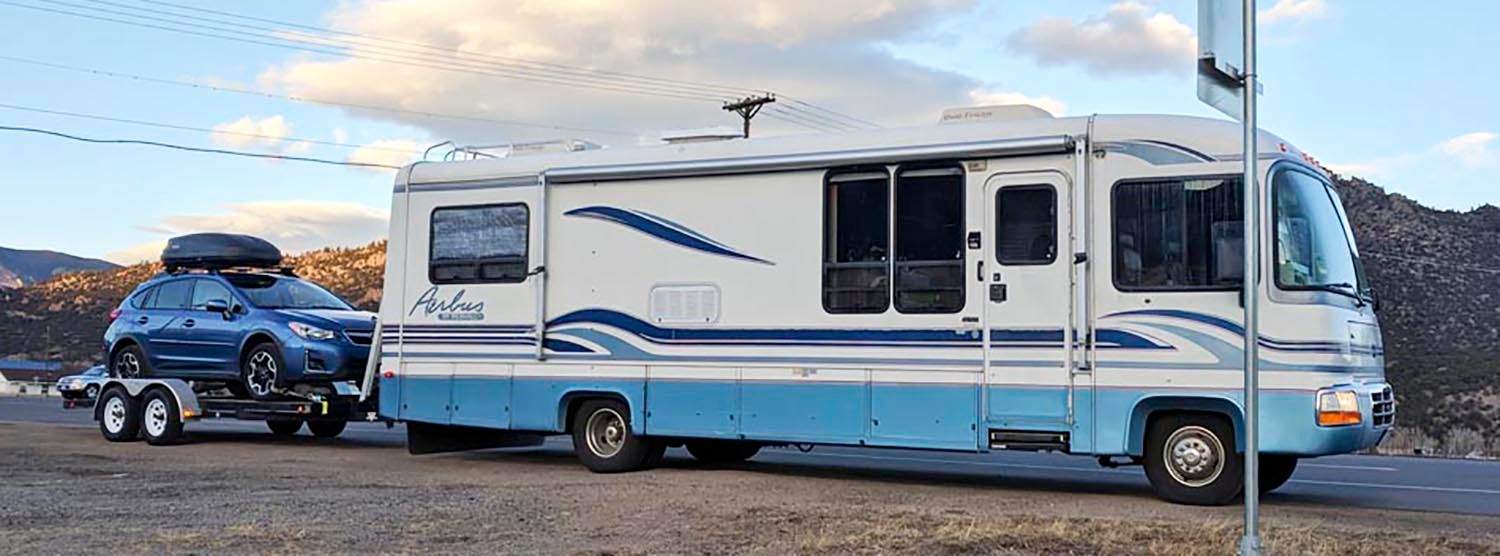
Towing a car behind your RV opens up extra convenience on your adventures, giving you more flexibility to explore. Learn about three popular methods: flat towing, using a tow dolly, or a car trailer.
This way, once the RV is parked, you don’t have to worry about breaking down camp every time you want to go out to explore parks, get food, and more. Bringing a car along gives campers greater freedom when on the road.
If you tow a car behind your RV, you will have three different towing options to consider. We’ll discuss these below. But first, let’s dig into som basics:
RVs for Rent That Can Tow a Car Behind Them
Confirm with the RV owner that they allow tow behinds before renting.
Equipment Needed to Tow a Car Behind an RV
Before we dive into the three options, let’s go over some equipment basics. No matter how you tow your accessory vehicle, the RV will require several basic items to safely pull the car.
Trailer Hitch
This is considered a permanent fixture on your RV. Most RVs come from the factory with a hitch, but for those that don’t, a trailer hitch can sometimes be added.
There are several styles of hitches, but the most common has two main components: a receiver and a ball hitch.
Hitches are rated by the amount of weight they can pull, so always be sure to refer to your vehicle (and trailer, if applicable) weight and the towing capacity of your RV before towing.
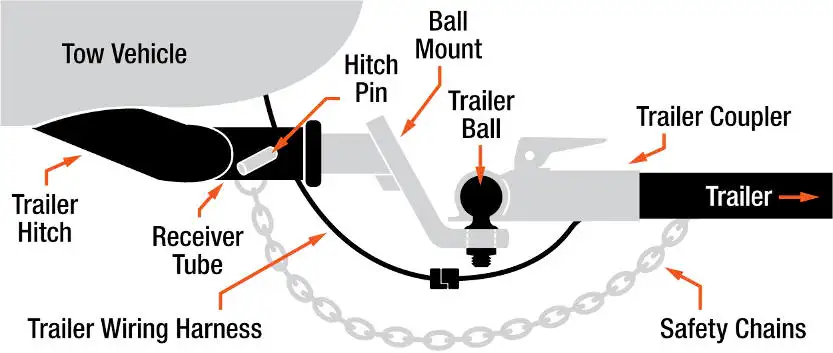
For more info on the different types of hitches and terminology, take a look at U-Haul’s Towing Glossary.
Electrical Connections
With any method of towing, you must connect wiring from the trailer to the coach. This electrical setup will control the brake lights, turn signals, license plate light, and, in some cases, the electric brakes from the trailer.
Not only does this make your toad street legal, but it makes it safe. Towing anything without functioning lights or signals is dangerous.
Coaches typically come with 6- or 7-pin connectors already near the hitch.
Three Ways to Tow Your Car Behind Your RV
There are three main ways to tow your car: four down, with a tow dolly, or with a car hauler. Deciding which to use comes down to two main factors: whether or not your car model is designed for towing and personal preference. Let’s dig a little deeper into each type.
Note: If you see the word toad or dinghy, we aren’t talking about frogs and boats! Those are both terms used for a towed car.
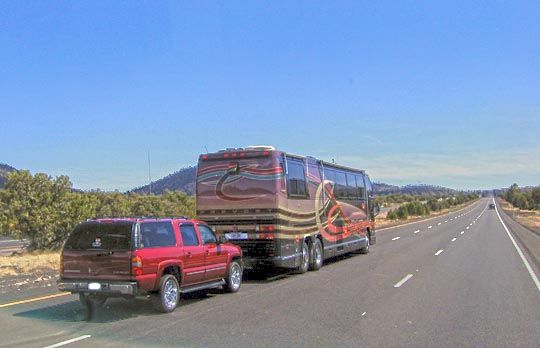
Four Down
Four down (also called “flat towing” or “dinghy towing”) refers to how many tires of the toad are on the road when pulling it behind your motorhome. Unlike the bulky equipment needed for dolly and trailer towing, four-down towing is done with a small tow bar.
The main issue that people find with this method is that many vehicle transmissions do not allow for this option. If you use this method to tow a car that isn’t designed for this, you could be looking at spending major $$$ on car transmission repairs.
If you are not sure, refer to the Dinghy Towing Guide. This guide offers a list of vehicles that can be “flat towed” as well as manufacturer’s instructions.
Equipment Needed for Four Down Towing
If your toad can be pulled behind the RV, you will need a few items to connect and brake the car:
Plan on spending anywhere from $1,500 to $2,500 for these items, depending on the amount of work you can do yourself versus the work you hire out (installation of the base plate, wiring, and the braking system may require a professional).
One detriment to towing a vehicle “four down” is that you cannot back up your motorhome while the vehicle is attached. However, it doesn’t require much time to unhook the toad and back up the RV if needed. This video from RV Inspection and Care is great at explaining the pros and cons of RV flat towing.
If you have checked the Dinghy Towing Guides and find that your toad cannot be pulled four down, then you have two options: Tow Dolly or Car Hauler.
RVs for Rent That Can Tow a Car Behind Them
Confirm with the RV owner that they allow tow behinds before renting.
Tow Dolly
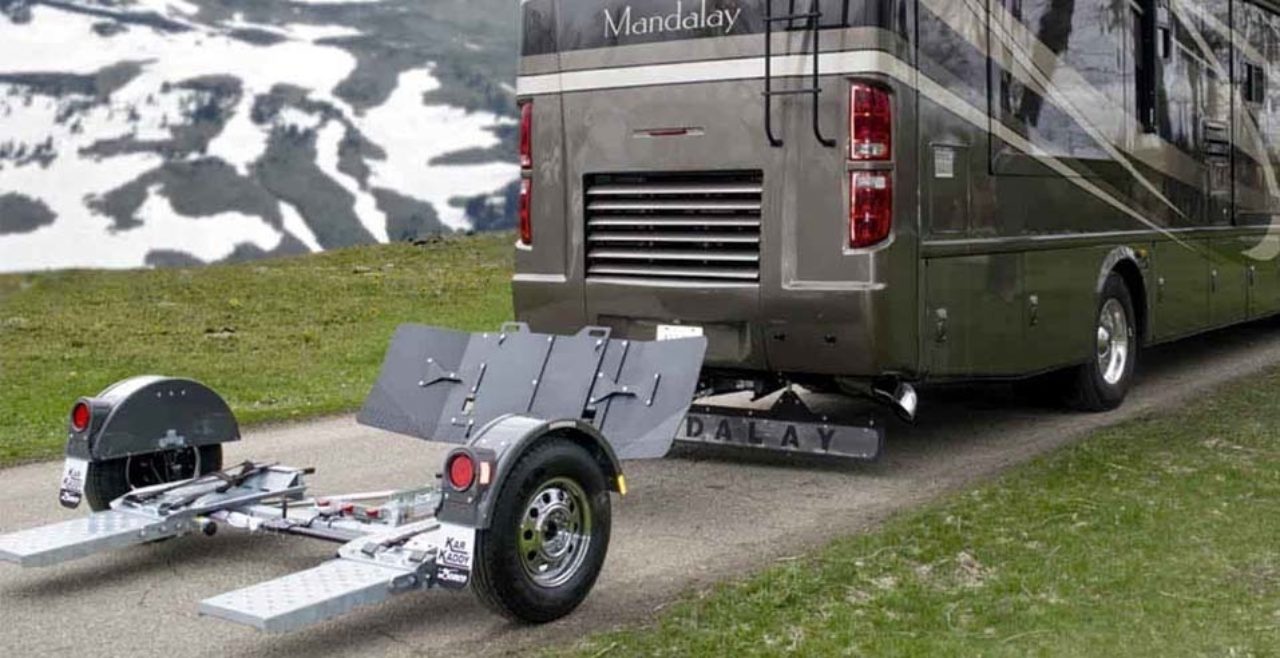
A tow dolly is a type of trailer on which the front two wheels of a car are loaded. The rear wheels of the car are on the ground and roll as the motorhome moves.
A tow dolly is used mainly for vehicles with front-wheel drive transmissions, although rear-wheel-drive cars can be placed in a tow dolly if their transmissions are disconnected.
A tow dolly requires less equipment, but the main reason to use a tow dolly is if your RV cannot pull the weight of a toad plus the car hauler it is loaded on.
Here’s one of our favorite tow dollies:


Equipment Needed for a Tow Dolly
Here are a few additional things you’ll need if using a tow dolly:
Most dollies come with attached ramps, so loading is usually straightforward. As with all towing, be sure your motorhome is attached securely to the dolly at the hitch ball, and that the motorhome’s parking brake is on while loading.
There are a couple of things to consider with towing using a dolly. First, most states require a license for the dolly (a little added expense. Secondly, you cannot back up the motorhome while the dolly and toad are attached.
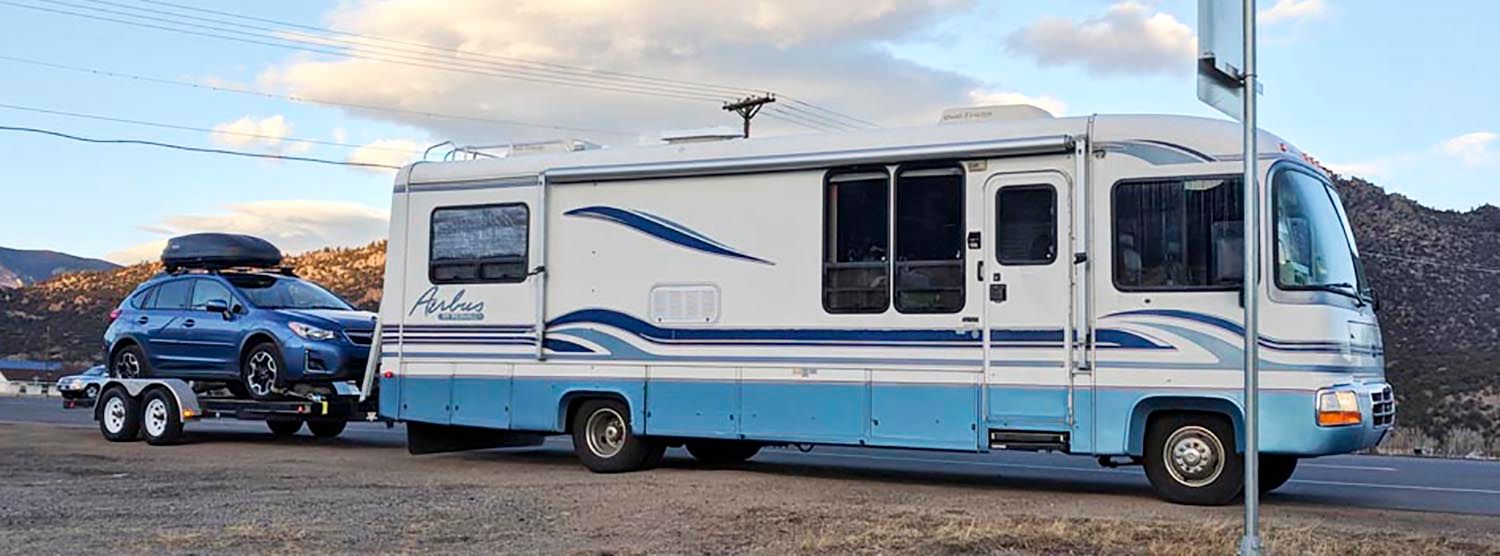
Car Hauler (Trailer)
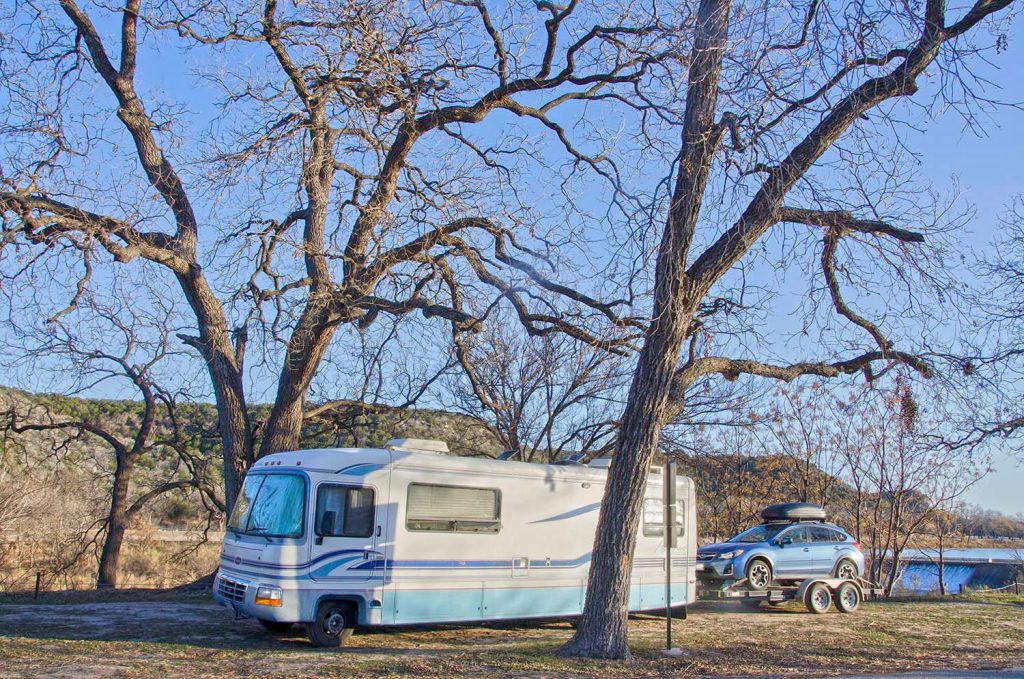
If your toad is an all-wheel-drive or 4-wheel drive vehicle, chances are that you will have to put it on a trailer to pull it behind your motorhome (check the Dinghy Towing Guides). Commonly known as a car hauler, the trailers normally have two axles for stability and low (or no) rails along the edges.
When purchasing a trailer, look for car haulers that are long enough for your vehicle. It is also important to make sure the axles on the trailer are rated at least 3,500 lbs. per axle.
Many trailers come with hidden ramps and one of two different braking systems. Surge brakes do not require a separate brake controller for the RV, but electric brakes do.
The latter system gives you the capability to control the brakes on the trailer from within your motorhome, rather than depending upon the pressure of the trailer against a hydraulic cylinder (surge brake).
Equipment Needed for Car Hauler Towing
If you are towing with a car hauler, you will also need a few extra items:
- Ramps (if the trailer does not include them)
- Ratchet straps for tie-down
- Brake controller (if the trailer has electric brakes)
If your RV did not come with a brake controller, purchase and installation will cost about $300. Your car hauler will require its own licensing, as well. In a pinch (and with talented driver skills) you can back up your motorhome while the trailer/toad is attached.
Another consideration is that once you reach your destination: you may need to detach the trailer and store it somewhere within the campground. If that is a concern, consider finding a “pull-through” campsite.
Though it might be somewhat of a hassle, a big plus for using a car hauler is saving the wear and tear on your toad’s engine and transmission while you haul it.
Pros and Cons of the Three Different Ways to Tow a Car Behind an RV
| Towing Method | Pros | Cons |
|---|---|---|
| Flat Towing | – Simple setup once installed – No need for additional trailers | – Only compatible with certain vehicles – Requires tow bars and baseplates |
| Tow Dolly | – Works with front-wheel drive cars – No vehicle modifications | – Difficult to back up – May require additional braking systems |
| Car Trailer | – Safe for any vehicle – Full vehicle protection | – Bulky and heavy – Requires more storage space and is costly |
FAQ: Ways to Tow a Car Behind Your RV
1. Can you tow any car behind an RV?
Not all cars are towable. Flat towing requires specific models that can handle four-wheels-down towing, while front-wheel-drive vehicles work with a tow dolly, and any vehicle can be towed on a trailer.
2. What is the best method to tow a car behind an RV?
It depends on your vehicle type. Flat towing is ideal for compatible vehicles, tow dollies for front-wheel-drive cars, and trailers work for any car but require more space.
3. How do I know if my vehicle can be flat towed?
Check your vehicle’s owner manual for flat towing (four-wheels-down) compatibility. Many Jeep, Ford, and Honda models are popular choices.
4. Do I need a braking system when towing a car?
Yes, most states require auxiliary braking systems when towing to ensure safety. The system helps stop both the RV and the towed vehicle safely.
5. What is the towing capacity of an RV?
Towing capacity depends on the RV’s make and model. Check the manufacturer’s manual to determine how much weight your RV can safely tow.
6. Do I need special accessories to tow a car behind my RV?
Yes, depending on your method. Tow bars, baseplates (for flat towing), safety cables, and braking systems are essential for a secure towing setup.
7. Can I back up while towing with a tow dolly?
Backing up with a tow dolly is challenging and not recommended, as it can damage both the dolly and the towed vehicle.
8. What is the most cost-effective towing method?
Tow dollies are usually more affordable than trailers or flat towing setups, though each has additional costs based on the vehicle and equipment needed.
9. What is the easiest towing method to set up?
Flat towing is generally easier once the setup is installed. It requires less equipment during each use compared to a tow dolly or trailer.
10. Do I need a special license to tow a car behind an RV?
In most states, a standard driver’s license suffices, but it’s essential to check local laws, as large trailers may require a commercial driver’s license (CDL).
Take Your Pick
Any way you look at it, bringing a “toad” along can be a great plan! No one relishes the thought of unhooking water and electricity at the campsite just to run some errands or take a side trip in the area.
Taking a car with you can save you money in the long run and sanity on a daily basis! Figure out which plan will work best for you if you decide to tow a car, and check with Outdoorsy for road trip ideas.


