Quick Answer: You can park your RV long-term at private RV parks ($500-$800/month), luxury resorts ($800-$1,500+/month), KOA campgrounds with monthly rates, membership parks like Thousand Trails, BLM land for free boondocking, or even your own land.
Popular snowbird spots in Arizona, Texas, and Florida book up fast—sometimes a year in advance—while northern parks fill up for summer. Monthly rates beat nightly camping by a landslide.
Every day, more people decide to give up their brick homes for the chance to explore the country in an RV. Gone are the days of retirement RVing: people of all ages and lifestyles are selling everything and collecting experiences instead of things. For some people, simplification comes by downsizing and purchasing an RV for full-time travel. For others, it’s easy to experience a seasonal or short-term stint on the road by renting an RV. One thing that RV owners and renters have in common — besides the love of the open road — is the need to find a place to park their rig each night. Some RVers love the excitement of finding a new place to stay every so often, while other RVers want to establish a seasonal setup and plan adventures from their RV home base.
Here at Outdoorsy, since we’ve tried almost every type of overnight RV accommodation, we’ve gathered our resources and shared our thoughts to help both experienced and newbie RVers find short-term, seasonal, long-term, and even permanent places to park their RVs.
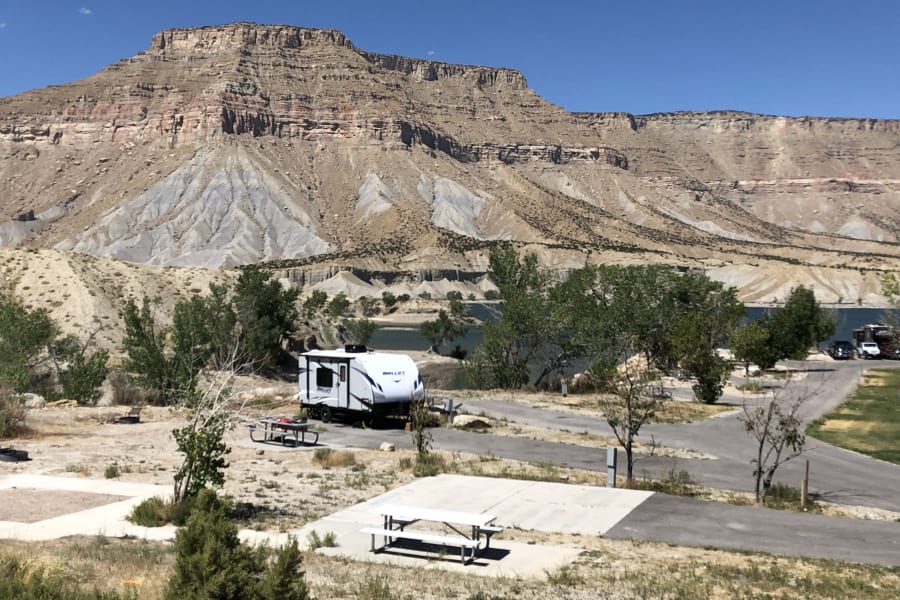
There are more options than ever before. Over 16,200 privately owned RV parks dot the U.S., from basic campgrounds to luxury resorts that rival five-star hotels. The challenge? Knowing where to look, what to expect, and how to snag the best spots before they fill up.
How Do I Find Long-Term RV Parking Near Me?
Start with Campendium and the AllStays app—they’re built for this. Filter by monthly rates and extended stay options, then pick up the phone and call parks directly. Seriously, call them. Many places don’t advertise their best long-term deals online.
Look, finding a spot for a weekend is easy. Finding a place to call home for three months? That takes a little detective work.
Your search toolkit:
- Campendium – Free, user reviews, filters for long-term stays, real talk from actual RVers
- AllStays app – Great mobile filtering, shows age restrictions and monthly rates
- RV Life Trip Wizard – Route planning meets campground database
- KOA’s extended stay page – Direct line to 500+ locations
- Harvest Hosts – Farms, wineries, breweries for unique overnight spots
- Old-fashioned phone calls – This is where the magic happens. “Do you offer monthly rates?” unlocks deals you won’t find online.
Here’s what you need to know about the market right now: RV parks are crushing it. The industry hit $10.9 billion in 2025, with parks running 60-70% full annually and near 100% in peak season at hot spots. Translation? Book early. Like, really early.
Planning to winter in Arizona or spend summer near the Great Lakes? Start looking 6-12 months out. Popular snowbird parks in places like Quartzsite and Yuma book a full year ahead. No joke.
If you’re considering renting an RV first to try the lifestyle, check out Phoenix RV rentals for Arizona access, San Diego RV rentals for coastal California, or Austin RV rentals to explore Texas Hill Country.
Destination-Based Camping
Before settling on a long-term or seasonal parking space, it’s best to do a little planning and base your choice on your destination.
Ask three questions before booking your long-term RV parking site:
- What part of the country do you want to explore?
- Do you plan on visiting certain national parks during your stay?
- Are you going to attend any concerts, festivals, or events?
Choosing a space around the things you want to see and do is essential. Destination-based camping makes exploring a little easier as you don’t have to venture too far from your home base to do what you want.
You’ve got options. From basic campgrounds to resort-style communities, membership programs that pay for themselves, and even free public land camping. The right choice depends on your budget, your rig, and whether you want a pool and yoga classes or just a quiet spot to call home.
Private RV Parks: The Bread and Butter
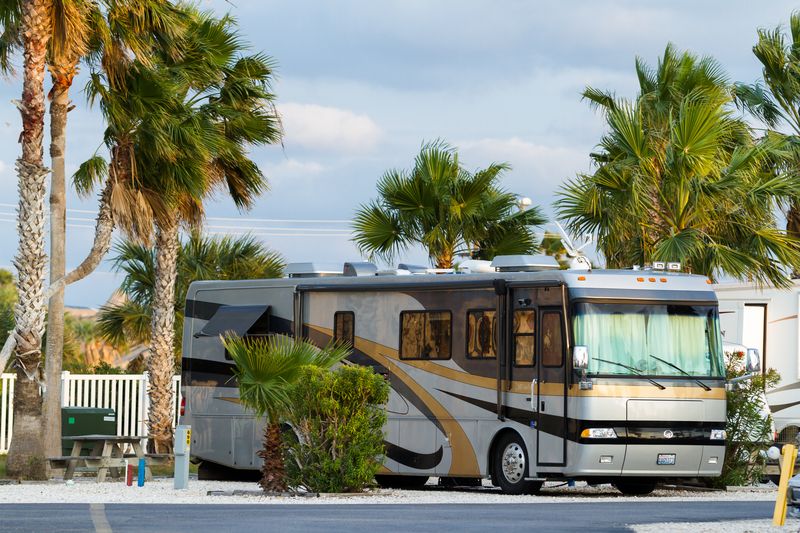
These are your neighborhood RV parks—locally owned, straightforward, and usually the most affordable option at $500-$800 monthly. You get full hookups (water, electric, sewer), Wi-Fi that works most of the time, laundry, and hopefully decent neighbors.
Some parks are updating their game to attract remote workers and digital nomads. Nicer internet, co-working spaces, that kind of thing. Makes sense when you consider that Millennials now make up 31% of campers and Gen Z is at 26%. They’re not your grandpa’s RV parks anymore.
Luxury RV Resorts: When You Want the Works
Think hotels, but with your RV. We’re talking $800-$1,500+ monthly, but you get pools, hot tubs, golf courses, fitness centers, organized happy hours, and concierge services. These places feel more like vacation resorts than campgrounds.
Popular spots include desert resorts around Palm Springs and Scottsdale, beachfront properties on Florida’s Gulf Coast, and mountain retreats near national parks. Perfect for Class A RV rentals if you want to go big or go home.
KOA: Consistent Quality Everywhere
Kampgrounds of America runs 500+ locations coast to coast, all offering extended stays. Monthly rates vary wildly—Benson KOA in Arizona goes for $550-$750 depending on the season, while coastal California spots like Petaluma can hit $1,800+.
What you’re paying for is consistency and community. KOA parks are especially good at organizing social stuff for snowbirds—potlucks, game nights, that kind of thing. No surprises, which matters when you’re committing to months instead of nights. Check out KOA’s extended stay options to see what’s available.
Membership Programs: The Best Deal if You Use Them
This is where the math gets interesting. Thousand Trails charges $615 a year for unlimited camping in one zone, plus $65 per additional zone. If you camp a lot, this thing practically prints money.
Here’s the deal:
- Thousand Trails – Unlimited camping, 80+ locations, pays for itself fast
- Passport America – 50% off at 1,900+ parks for $44/year
- Escapees RV Club – Member parks, mail forwarding, support network
Do the math. Thirty nights at average campground rates would cost $1,000+. Thousand Trails pays for itself in a month if you’re full-timing or doing serious travel.
Public Land Boondocking: Free, But Bring Everything
BLM land throughout the Southwest offers free dispersed camping. The catch? No hookups, no amenities, 14-day limits (though you can move to another spot after). You need a self-sufficient rig with solar, good batteries, and tank capacity.
Hot spots include:
- Arizona: Quartzsite, Yuma, Lake Havasu area
- Nevada: Around Las Vegas, Valley of Fire region
- Utah: Moab surrounds, southern Utah desert
- California: Imperial Sand Dunes, Anza-Borrego
It’s not for everyone, but if you’ve got a solid campervan rental setup with solar and you crave silence and solitude, it’s unbeatable.
Buying Your Own Land: The Long Game
Some full-timers buy rural property just to park their RV. Texas, Arizona, Montana—you can find land for $10,000-$50,000 if you’re not picky about location.
Before you sign anything:
- Check zoning laws (many places restrict RV dwelling)
- Watch out for HOA rules
- Make sure you can get power, water, septic
- Research county regulations on permanent RV living
It’s a commitment, but you’ll never worry about reservations or rate hikes again.
RV Club Courtesy Parking: Member-to-Member Love
If you own an Airstream, you can tap into their courtesy parking network—members with extra space host fellow Airstreamers for free. Other brands and general RV clubs have similar setups. It’s community at its finest.
Where Are the Best Destinations for Long-Term RV Parking?
Location is everything. Your destination shapes your entire experience—weather, activities, community, costs, and whether you’ll need three sweaters or three swimsuits. Most long-term RVers follow the weather: south for winter, north for summer.
Chasing Winter Sun: The Snowbird Trail
The Sun Belt—from Southern California through Arizona, New Mexico, Texas, and into Florida—becomes RV headquarters every winter. Millions of northerners escape the freeze, and for good reason. Who wants to winterize their rig when you can park it in 75-degree sunshine?
Arizona: The Snowbird Capital
Arizona owns winter RVing. Period.
Quartzsite transforms from a sleepy desert town (population: 3,600) into an RV mega-city every January and February. Over a million visitors show up for gem shows, swap meets, and the world’s largest RV gathering. It’s chaotic, it’s dusty, it’s unforgettable.
Yuma and Winterhaven offer perfect winter weather without the Quartzsite crowds. Tons of RV parks, strong community, and Mexico’s just across the border for cheap dentist appointments (seriously, that’s a thing).
Phoenix and Scottsdale give you urban amenities—restaurants, museums, spring training baseball—with desert beauty. Check out Phoenix RV rentals if you’re testing the area before committing.
Tucson costs less than Phoenix and delivers gorgeous Sonoran Desert scenery with saguaros and mountain vistas. Hikers love it here.
Arizona’s winter temps (60-75°F) mean you can skip winterization completely. The trade-off? Summer is brutal (110°F+), so most snowbirds clear out by April.
Texas: Big State, Big Variety
Everything’s bigger in Texas, including your options.
The Rio Grande Valley (Harlingen, McAllen, Mission) hosts massive snowbird communities—we’re talking thousands of long-termers. It’s affordable, warm, and social. Winter Texans (yeah, that’s a real term) own this area November through March.
The Coastal Bend around Rockport and Port Aransas offers Gulf beaches with mild winters and killer fishing. Austin and the Hill Country bring live music, amazing food, and natural swimming holes if you want culture with your camping.
South Padre Island is tropical paradise with KOA sites starting at $1,145 monthly. Worth it if you want toes-in-the-sand winter living.
Texas wins on cost of living—no state income tax, cheap groceries, reasonable park rates. Your money goes further here.
Florida: Premium Prices, Premium Beaches
The Gulf Coast (Naples, Fort Myers, Sarasota) costs more but delivers postcard-perfect beaches and upscale communities. Book 1-2 years ahead at popular parks. Not kidding—these spots fill up fast.
The Space Coast around Titusville and Cocoa Beach offers rocket launches, beaches, and slightly more reasonable prices. The Panhandle’s “Forgotten Coast” (Pensacola, Destin) provides beauty and value without the crowds.
Fair warning: Florida brings humidity, bugs, and summer heat that rivals Arizona. But those winter sunsets over the Gulf? Worth it.
California: Paradise at a Price
San Diego offers year-round mild weather—literally perfect—but you’ll pay $1,500-$2,500 monthly for the privilege. The Central Coast around San Luis Obispo and Pismo Beach is stunning but similarly expensive.
Wine Country near Petaluma works for wine lovers willing to invest in the experience. Desert regions like Palm Springs and Borrego Springs provide seasonal winter appeal.
California’s gorgeous, no question. Just check your budget first.
Summer Escapes: Heading North
When temperatures climb, smart RVers migrate north for cool mountain air and lake breezes.
Mountain States
Colorado around Estes Park, Durango, and Pagosa Springs puts you near Rocky Mountain National Park and offers 70-degree summer days. Montana (Glacier National Park, Bozeman) and Wyoming (Jackson Hole, Yellowstone area) deliver spectacular scenery and genuine western culture.
Book 3-6 months out. These spots fill up fast June through August.
Great Lakes Region
Michigan dominates summer RV travel around Traverse City, Sleeping Bear Dunes, and the Upper Peninsula. Wisconsin’s Door County and the Dells attract families, while Minnesota offers boundary waters and the stunning North Shore of Lake Superior.
Fresh water, no salt, and fewer bugs than Florida.
Pacific Northwest
The Oregon Coast near Oregon City provides dramatic coastline without the California price tag. Washington’s Puget Sound, Olympic Peninsula, and Cascades offer lush green landscapes and cool summers. Idaho (Boise, Coeur d’Alene) brings mountains and lakes with fewer crowds.
Rain? Sure, sometimes. Gorgeous scenery? Absolutely.
How Much Does Long-Term RV Parking Cost?
Real talk: you’ll pay anywhere from $500 to $2,500 monthly. Location matters most, followed by amenities and season. A basic park in rural Texas costs way less than a beachfront resort in San Diego.
What to Expect
Budget parks ($500-$700/month) – Full hookups, basic Wi-Fi, laundry. No frills, but they get the job done.
Mid-range parks ($700-$1,000/month) – Better amenities, nicer facilities, maybe a pool and rec room.
Luxury resorts ($1,000-$1,500+/month) – Pools, hot tubs, golf, organized activities, concierge service, the works.
Premium coastal/mountain ($1,500-$2,500+/month) – Prime locations where you’re paying for the zip code.
According to Outdoorsy’s RV park rates data, you’re looking at an average of $500-$1,200 monthly, with electricity sometimes billed separately at $0.15-$0.20 per kilowatt-hour. Compare that to nightly rates averaging $38.50—monthly parking is a steal if you’re staying put.
Regional Reality Check
Let’s get specific. Here’s what people are actually paying in 2025:
Sun Belt Winter (When Everyone Shows Up):
- Benson KOA, Arizona: $550-$750 depending on which month
- South Padre Island KOA, Texas: $1,145+ monthly
- Florida Gulf Coast: $800-$1,500 monthly
- Southern California: $1,500-$2,500 monthly (ouch)
Northern Summer (Escape the Heat):
- Great Lakes region: $600-$900 monthly
- Colorado/Mountain states: $800-$1,200 monthly
- Pacific Northwest: $900-$1,400 monthly
Hidden Costs (Because There Are Always Hidden Costs)
Monthly rates usually include water, sewer, and trash. But watch out for extras:
- Electricity – Sometimes separate, $50-$200/month depending on AC use
- Propane – $30-$80/month for heating and cooking
- Laundry – $3-$5 per load adds up fast
- Pet fees – $25-$75/month extra
- Extra vehicles – $50-$100/month per additional car
- Guests – Some parks charge $5-$10 per visitor per day
- Cable/upgraded internet – $30-$60/month if you need it
How to Actually Save Money
Book shoulder season. May and September offer the same weather as peak months but with 20-30% discounts. Everyone else is coming or going—you’re smart enough to time it right.
Commit longer. Three+ months often gets you 10-20% off. Parks love guaranteed occupancy.
Go smaller. Class B RVs use way less electricity than big Class As. Better fuel economy too.
Join Thousand Trails. Seriously, that $615 annual fee pays for itself after a month of use.
Work camp. Trade some labor for reduced or free rent. Not for everyone, but it works.
Park strategically. That gorgeous resort on the coast? The park 30 minutes inland costs 40% less for the same weather.
What Should I Consider When Choosing a Long-Term RV Site?
Before you book, ask yourself: can I actually live here for three months? A weekend spot that’s “good enough” becomes a nightmare when it’s your everyday life. Think through the details before you commit.
Climate and Comfort
Some people love desert heat. Others would rather freeze. Figure out which one you are.
Winter RVers go south for 75-degree days and zero winterizing headaches. Summer travelers escape to mountains and lakes for cooling breezes. Sounds simple, but don’t underestimate humidity (hello, Florida), wind (Arizona can be brutal), or sun exposure (important if you’re running solar).
Site Basics Matter More Than You Think
Full hookups are non-negotiable for long-term stays. Water, electric (30/50 amp depending on your rig), and sewer. Anything less gets old fast when you’re living there.
Level sites aren’t just nice to have—your fridge won’t work right if you’re parked on a slope. Neither will you sleep well with your head six inches lower than your feet.
Pull-through vs. back-in? If you’ve got a big rig or you’re nervous about backing up, pay extra for pull-through. Your blood pressure will thank you.
Concrete pads beat gravel, which beats dirt. Long-term living means mud when it rains and dust when it doesn’t. Concrete solves both.
Amenities That Actually Matter
Laundry – Clean, modern, enough machines that you’re not waiting an hour for your turn.
Internet – If you work remotely, test the Wi-Fi before you pay. 46% of campers work during trips now. Slow internet makes that impossible.
Recreation – Pool, hot tub, dog park, fitness center. Whatever keeps you sane when you need a break from your 300 square feet.
Storage – For kayaks, bikes, seasonal stuff. Not every park offers it.
Mail/packages – Full-timers need reliable mail handling. Make sure they can accept packages.
Location, Location, Location
Ask yourself:
How far to the grocery store? (You’ll make this trip weekly.)
Where’s the nearest hospital? (Especially important if you’re over 50.)
Can I walk to anything, or am I driving everywhere?
Is this close enough to what I came here to see?
Check out nearby city RV rental pages to see what’s accessible from different areas.
Community and Vibe
Long-term RVing can get lonely without good neighbors.
Some parks skew retired and quiet. Others are full of families and kids running around. Some attract digital nomads and remote workers. Figure out which scene fits you.
Look for organized activities if you want built-in social life. KOA and other chains usually offer potlucks, game nights, happy hours. Desert snowbird parks basically run continuous social calendars November through March.
Pet people: Check for dog parks and pet-friendly amenities. Not all “pet-friendly” parks are created equal.
Rules (Read the Fine Print)
Maximum stays – Some parks cap you at 6 months. Others let you stay indefinitely.
RV age restrictions – Many won’t accept rigs older than 10-15 years. Check before you book.
Pet policies – Breed restrictions, size limits, number allowed, monthly fees.
Guest limits – Can friends visit? For how long? Extra charges?
Decorations – Can you put out chairs, awnings, plants? Some parks are strict.
Background checks – Increasingly common for monthly stays. Just FYI.
Safety Check
Gated access and security patrols reduce theft and give peace of mind. Good lighting on roads and campsites helps too.
Research the neighborhood. Check local crime stats. Ask current residents what it’s really like (Facebook RV groups are gold for this).
Money Talk
Get everything in writing. Rates, what’s included, cancellation policy, refund terms.
Watch for deposits – Usually 1-2 months’ rent upfront.
Lock in rates if you’re booking multiple months. Prices can creep up.
Ask about hidden fees – Reservation fees, cleaning deposits, departure charges. They add up.
What Are the Pros and Cons of Long-Term RV Parking?
Understanding both advantages and challenges of extended RV parking helps set realistic expectations and prepare for the lifestyle.
Advantages:
Financial Benefits: Long-term RV parking typically costs $500-$1,200 monthly versus $1,500-$3,000+ for apartment rent in many markets. RVers also save on dining by cooking in their own kitchen, reducing restaurant expenses by 50-70% compared to traditional travel.
According to a 2024 RV Travel Cost Savings Study by Go RVing/RVIA, RV trips save 20-60% compared to hotels and air travel for families, with savings compounding over longer stays.
Lifestyle Flexibility: Long-term RVing allows seasonal migration—winter in Arizona, summer in Colorado—following perfect weather year-round. Remote workers enjoy location independence while maintaining stable home bases, a trend accelerated by pandemic-era work-from-home policies.
Simplified Living: The minimalist RV lifestyle reduces possessions, maintenance, and stuff-management stress. Many full-timers report greater life satisfaction trading square footage for experiences, aligning with the “van life” and tiny house movements popular among Millennials and Gen Z.
Community Connection: Long-term RV parks build strong communities of like-minded travelers. Snowbird programs offer organized activities, potlucks, and lasting friendships. RVParkIQ data shows 38% of private parks now function partly as extended-stay communities.
Access to Nature and Recreation: Extended stays near national parks, beaches, and wilderness areas enable deep exploration versus rushed weekend trips. Grand Teton and Yellowstone guides on Outdoorsy show the adventure possibilities.
Challenges:
Limited Space: Even large Class A motorhomes offer 300-400 square feet—challenging for couples long-term and near-impossible for families. Small RV rentals require aggressive minimalism and organization.
Weather Exposure: RVs lack home-level insulation, making extreme temperatures uncomfortable and expensive to heat/cool. Summer Arizona heat and northern winter cold push HVAC systems hard, raising electric bills significantly.
Maintenance Responsibilities: RVs require constant upkeep: tires, brakes, batteries, roof seals, slide-out mechanisms, water systems, propane, etc. Long-term parking still demands regular maintenance even when stationary.
Limited Privacy: RV park sites sit 15-30 feet apart—close quarters with neighbors. Noise from adjacent sites, roads, or activities can be intrusive. Finding truly private sites requires boondocking or premium resort spacing.
Internet Reliability: Despite improvements, many RV parks offer weak Wi-Fi incapable of supporting remote work, video calls, or streaming. Budgeting for cellular hotspots with unlimited data ($60-$100/month) is essential for digital nomads.
Social Isolation Risks: While communities exist, long-term RVing can be isolating away from established friend/family networks. Solo travelers and retirees particularly face loneliness risks without intentional community building.
Booking Competition: Premium snowbird locations book 12-24 months in advance. Last-minute long-term spots are nearly impossible in high-demand markets December-March (Sun Belt) and June-August (mountains/lakes).
Legal/Domicile Complexities: Full-time RVers face challenges establishing legal residency for voting, taxes, vehicle registration, and mail. Popular domicile states (Texas, Florida, South Dakota) offer solutions but require navigation.
What RV Type Works Best for Long-Term Living?
Here’s the truth: size matters when you’re living in it. That cute campervan is perfect for a weekend. Two months? You and your partner might kill each other. Or fall even more in love. It depends.
Class A Motorhomes: Go Big or Go Home
These are the buses of the RV world—25 to 45 feet of rolling luxury. Full kitchens, residential fridges, king beds, multiple slide-outs, sometimes even washer/dryers.
The good: Maximum space and comfort. You can actually stand up in the shower. Storage for days. Feels like an apartment on wheels.
The bad: Gas mileage that’ll make you cry (6-10 MPG). Maintenance ain’t cheap. Limited maneuverability—good luck navigating narrow mountain roads. Rental costs $100-$500/night, purchase runs $150,000-$500,000.
Best for: Retirees who want comfort, couples who need space, anyone who plans to stay parked most of the time.
Check out Class A RV rentals if you want to test drive the luxury lifestyle.
Class C Motorhomes: The Sweet Spot
Built on truck chassis, 20-33 feet, with that distinctive cab-over bed. Goldilocks territory—not too big, not too small.
The good: Easier to drive than Class A, more affordable, decent storage, family-friendly with bunk options. Better gas mileage (10-14 MPG).
The bad: Less spacious than Class A, fewer residential features, that cab-over bed gets hot in summer.
Best for: Families, couples who want mobility plus space, first-timers testing long-term RV life.
Class B Campervans: Minimalist Living
16-24 feet of van life. Mercedes Sprinters, Ram Promasters, Ford Transits. Instagram loves these.
The good: Best fuel economy (14-20 MPG), park anywhere a car can, easy urban access, cheaper to rent and maintain. Stealth camping is actually possible.
The bad: Tiny. Like, really tiny. Under 200 square feet. One person, doable. Two people long-term? You better really like each other.
Best for: Solo travelers, minimalists, boondockers, digital nomads who value mobility over space.
Class B RV rentals let you test the minimalist life before committing.
Travel Trailers: Maximum Flexibility
12-35 feet that you tow behind a truck or SUV. The key advantage? Detachable.
The good: Leave the trailer at your site, drive your truck to explore. More affordable than motorhomes. Huge variety of floor plans. Store it easily when not using it.
The bad: Backing up is a learned skill (ask me how I know). No bathroom access while driving. Requires a capable tow vehicle.
Best for: People who need a separate vehicle, families transitioning from weekend trips to longer stays.
Browse travel trailer rentals to find your match.
Fifth Wheels: Like a Real House
20-40 feet of split-level living space that hitches in your truck bed. These are what you see dominating snowbird parks.
The good: Most residential feel, spacious with multiple rooms, tons of storage, washer/dryer common. Stable while towing.
The bad: Requires heavy-duty truck (3/4-ton minimum). Not easy to maneuver. Higher entry cost. Some parks can’t fit them.
Best for: Full-timers, retirees, couples wanting maximum space and comfort for extended stays.
Making Your Choice
Ask yourself:
- How many people? (Solo = any size; couples = Class C+; families = need more space)
- How often will I move? (Frequent = smaller and easier to drive)
- What’s my budget? (Bigger = more expensive to buy, fuel, and maintain)
- Do I need to work remotely? (Need space for a desk and decent internet)
- Am I towing or driving? (Affects your whole setup)
Pro tip: Rent before you buy. Test a few different types on Outdoorsy. A week in a Class B will tell you real quick if van life is your jam or your nightmare.
How Do I Prep My RV for Long-Term Parking?
Set it up right the first time, and your life gets way easier. Rush it, and you’ll be fixing problems for months.
Getting Set Up
Level your rig properly. Not just “close enough”—actually level. Your fridge needs this to work right. So does your plumbing. Use leveling blocks systematically until your bubble level says you’re good.
Deploy all stabilizers. Every. Single. One. You’re not camping for a weekend—you’re living here. That rocking motion gets old fast.
Hook up utilities carefully. Check for leaks after connecting water. Make sure your electrical connection is solid (30 or 50 amp, depending on your rig). Sewer hookup needs to be secure and sloped right for drainage.
Create outdoor living space. Awning, outdoor rug, chairs, maybe some plants. This doubles your living area and keeps you from going stir-crazy inside.
Maintenance You Can’t Skip
Monthly checks:
Roof seals (leaks are expensive)
Smoke and CO detectors (seriously)
Tire pressure (they’ll lose air just sitting there)
AC filters (clean or replace)
Water system (flush it out)
Every few months:
Inspect slide-out seals
Lubricate moving parts
Check battery health
Run the generator under load
Seasonal deep clean:
Everything. Top to bottom. Inside and out.
Annual professional inspection:
Some things need expert eyes. Don’t skip this.
Weather Prep
Summer heat: Reflective window covers, vent fans running 24/7, portable AC if your built-in can’t keep up. Park with your door facing away from afternoon sun.
Winter cold: Skirting around the base keeps pipes from freezing. Heated water hose (not the cheap one—spend the extra $30). Tank heaters if you’re in freeze territory.
Wind: Secure everything. Retract awnings before storms. Know your park’s wind history.
Security Basics
Lock your doors. Yes, even in nice parks. Wireless cameras are cheap and give you peace of mind. Keep valuables out of sight. Motion-sensor lights help.
Keep your registration and insurance current and accessible. You’ll need them eventually.
Frequently Asked Questions
How long can I stay at one RV park?
Depends on the park. Most private parks let you stay 6-12 months before they ask you to move on for a bit. KOA and public campgrounds usually cap it at 28 days max. Some luxury resorts don’t care—you can stay year-round if you pay up.
Always ask about their specific policy before booking. Some places require you to leave for 30-60 days between long-term stays. It’s annoying, but them’s the rules.
Do I need special insurance for long-term RV parking?
Yep. Your regular auto insurance probably doesn’t cover you when you’re living in your RV instead of just driving it around on vacation.
Get specialized RV insurance from companies like Progressive, Co-operators, or Good Sam. Full-timer coverage runs $1,000-$2,500 a year depending on your rig’s value. Outdoorsy provides $1 million coverage if you’re renting, but if you own, double-check your policy covers extended stationary periods.
Not having the right insurance is one of those things that seems fine until it very much isn’t.
Can I work remotely from a long-term RV site?
Absolutely. Nearly half of all campers (46% according to 2024 KOA data) work remotely during their trips now. It’s totally doable.
The catch? Internet quality varies wildly. Some parks have great Wi-Fi. Others are stuck in 2010. Test the connection before you commit. Budget $60-$100/month for a cellular hotspot as backup—you’ll probably need it.
Starlink satellite internet ($120/month) is becoming the gold standard for serious remote workers. It works pretty much anywhere.
What’s the difference between long-term RV parking and RV storage?
Night and day.
Long-term parking means you’re living in your RV at the site—utilities hooked up, amenities available, paying $500-$1,200+ monthly. You’re actually using it.
RV storage is just a parking spot for your winterized, empty RV when you’re not using it. Costs $90-$200 monthly. No hookups, no living there. Check out Outdoorsy’s RV storage guide for details.
Are pets allowed at long-term RV sites?
Most parks welcome pets, but with rules. Typical restrictions: 2-3 pets max, weight limits around 50 pounds, breed restrictions (pit bulls and rottweilers often banned), and extra fees ($25-$75/month).
Dog park availability varies. Some parks have awesome dog facilities, others have nothing. Always verify pet policies before booking—surprises suck when you’ve already committed.
Search for pet-friendly RV rentals on Outdoorsy if you’re planning to rent.