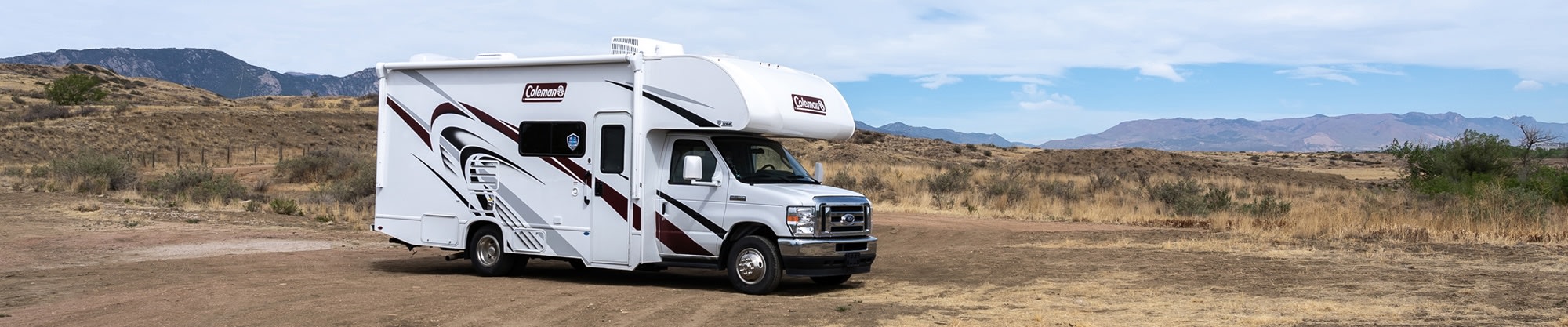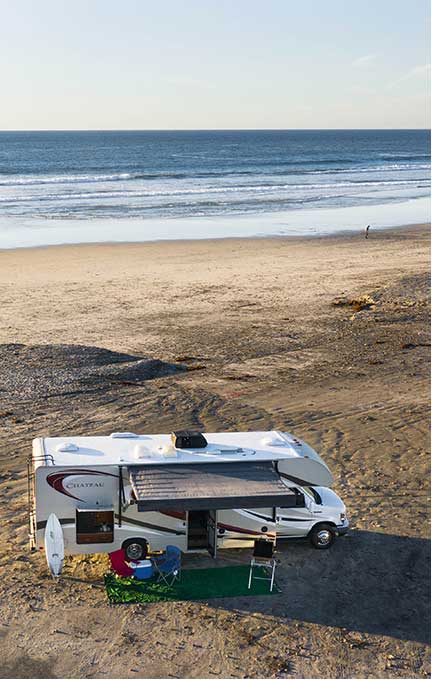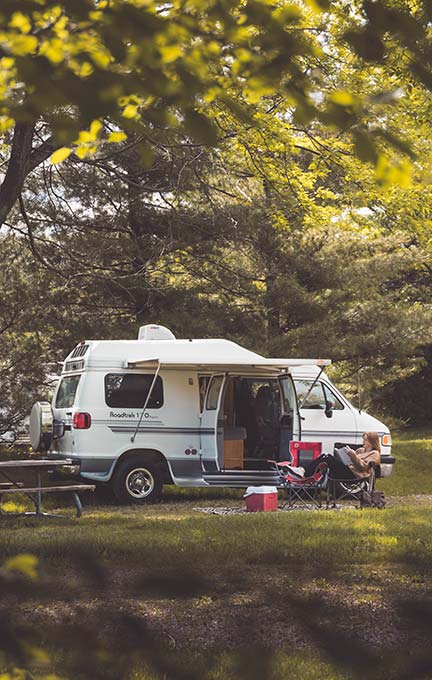

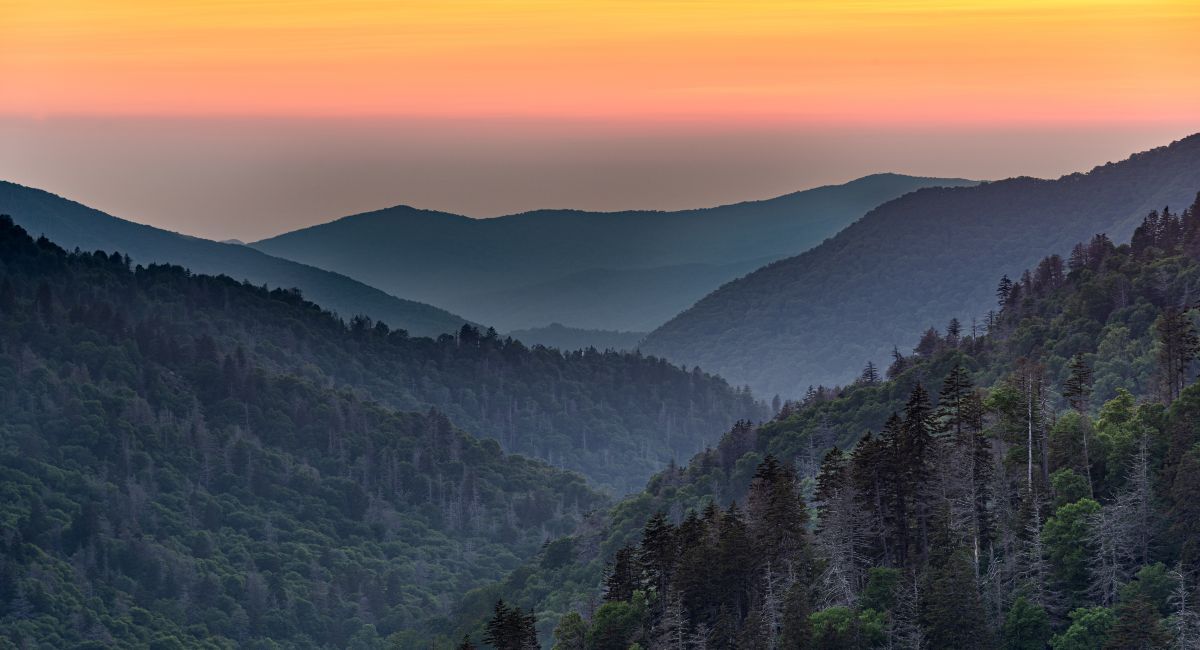
The Smokies is one of the most rewarding national parks to see by RV — and one with two surprises most renters don't see coming. The first: almost none of the in-park campgrounds have hookups. The second: even though the park has no entrance fee, you now need a Park It Forward parking tag for anywhere you stop outside your campsite. Get both right and the rest of the trip falls into place. This guide leads with the per-campground length-and-hookup picture and the parking tag, so you don't arrive at Cades Cove expecting a power pedestal.
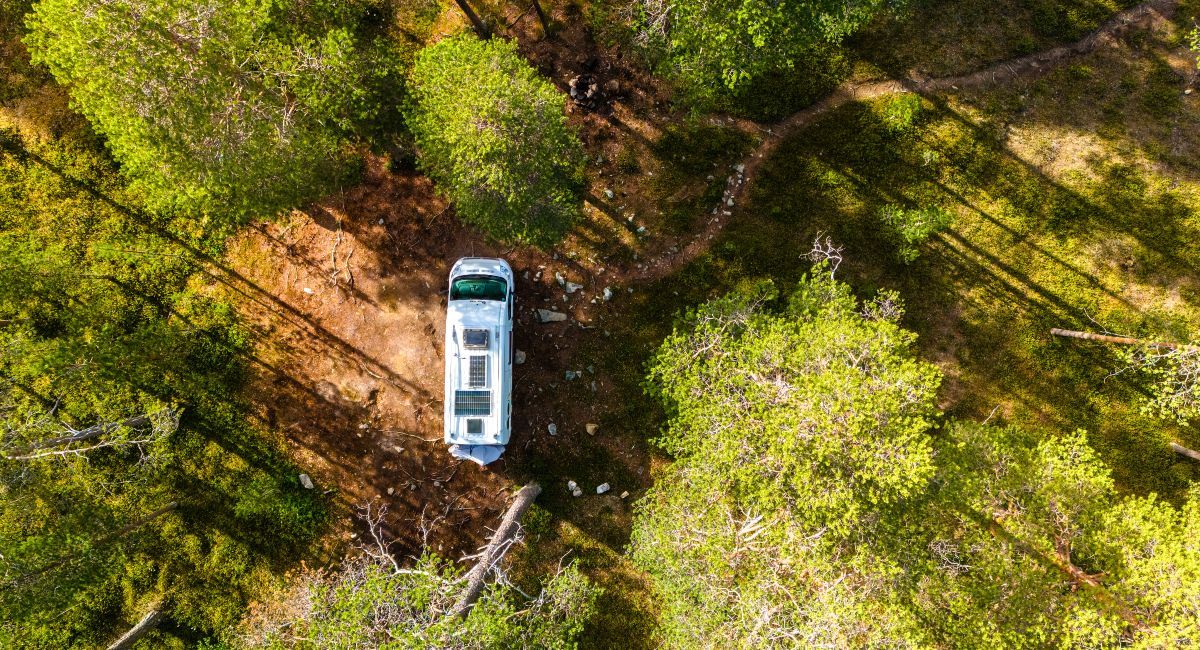
The short version:
- The Smokies has 10 frontcountry campgrounds; only Look Rock has electric and water hookups (some sites only). Everywhere else is dry camping with a dump station.
- Max RV length varies a lot: Look Rock ~48 ft, Smokemont/Cades Cove ~40 ft motorhome / 35 ft trailer, Elkmont ~35/32 ft, Cosby ~25 ft, Deep Creek ~26 ft. Match your rig before you book.
- Cades Cove and Smokemont are year-round; the rest are seasonal.
- The park is free, but Park It Forward parking tags are required: $5/day, $15/week, $40/year. Campers don't need one at their reserved site, but do for any other parking.
- Want hookups? Rent a self-contained rig and dump as you go, or book a full-hookup park in Gatlinburg, Pigeon Forge, or Townsend.
Can you RV camp in Great Smoky Mountains National Park?
Yes — the park has 10 developed frontcountry campgrounds that take RVs, with Cades Cove and Smokemont open year-round and the rest on a seasonal calendar. Sites are dry-camp at every campground except Look Rock, which has a small number of electric-and-water sites. All frontcountry reservations are made through Recreation.gov six months ahead.
In our experience, the no-hookup reality is the Smokies' biggest surprise for renters — they picture power pedestals and arrive to dry sites at Cades Cove. The 5-amp outlets at Cades Cove, Elkmont, and Smokemont are for medical equipment only — they're not RV power. If you need to plug the rig in, Look Rock or a private full-hookup park is the answer.
Quick orientation on the layout:
- Tennessee side (most renters' default): Cades Cove (year-round), Elkmont, Cosby, Look Rock, Abrams Creek, and the trailheads/visitor centers around Gatlinburg.
- North Carolina side: Smokemont (year-round), Deep Creek, Big Creek, Balsam Mountain, and Cataloochee.
- No US-441 RV cut-throughs. Newfound Gap Road (US-441) crosses the park but campground access for big rigs varies — RVs and towed trailers are not allowed over the bridge at Metcalf Bottoms, so Elkmont must be accessed from the Gatlinburg or Townsend entrances.
What's the max RV length at each Smoky Mountains campground?
Length limits range from about 48 feet at Look Rock down to 25 feet at Cosby. Cades Cove and Smokemont fit roughly 40-foot motorhomes (35-foot trailers); Elkmont about 35 feet for motorhomes, 32 feet for trailers; Deep Creek about 26 feet. Read the per-site length on Recreation.gov before booking — campground summary numbers are the maximum, not the typical site.
Here’s a simple campground-by-campground breakdown of the most popular RV-friendly options.
Cades Cove Campground is open year-round and can accommodate motorhomes up to approximately 40 feet and trailers up to about 35 feet. Standard campsites do not include hookups, although limited 5-amp electrical service may be available for medical equipment.
Smokemont Campground in North Carolina is also open throughout the year. It has similar size limits, allowing motorhomes up to roughly 40 feet and trailers up to around 35 feet. There are no standard hookups, aside from limited 5-amp medical electrical access.
Elkmont Campground operates seasonally and is best suited to motorhomes up to approximately 35 feet and trailers up to about 32 feet. It does not offer water, sewer, or regular electrical hookups, although limited medical electrical service may be available.
Look Rock Campground is a seasonal option with some of the largest RV sites in the area, accommodating rigs up to approximately 48 feet. Unlike most campgrounds in the park, select sites include both electrical and water hookups.
Cosby Campground is open seasonally and can generally accommodate RVs up to about 25 feet. Campsites do not include hookups, making it more appropriate for smaller rigs prepared for dry camping.
Deep Creek Campground in North Carolina is another seasonal, no-hookup campground. It can accommodate RVs up to approximately 26 feet and is best suited to smaller motorhomes, campervans, and travel trailers.
We've watched the longer sites at Smokemont and Cades Cove disappear first every season, while the 25-foot cap at Cosby quietly turns away big rigs that didn't read the small print. A few practical reads from this table:
- Big rigs (35+ ft): Look Rock or Smokemont are your best in-park options. Cades Cove fits some, but pads vary.
- Mid-sized (28–32 ft): Smokemont, Cades Cove, Elkmont (Tennessee side), Deep Creek (NC side).
- Small (under 25 ft): Every frontcountry campground takes you. Cosby and Deep Creek become viable, which opens the quieter loops.
- If your trailer is right at the limit, read the per-site dimensions — driveway slope and length make many "fits-35-ft" sites better suited to a tent or a smaller RV in practice. The NPS Elkmont page notes "extreme slope or length of driveway make certain sites more suitable for tents than RVs."
If you're new to choosing, a small rig that fits Cosby's 25-foot limit opens every Smokies campground; if you want full hookups instead, browse Great Smoky Mountains National Park RV rentals.
Do Smoky Mountains campgrounds have hookups — and what do you do if they don't?
No, with one small exception. Only some sites at Look Rock have electric and water; every other Smokies frontcountry campground is no-hookup. The 5-amp outlets at Cades Cove, Elkmont, and Smokemont are for medical equipment only and are not rated to power an RV. Dump stations are at Cades Cove, Cosby, Deep Creek, Look Rock, Smokemont, and at the Sugarlands Visitor Center (6 mi from Elkmont).
Three working setups for a renter who needs hookups:
- Self-contained dry camping inside the park. Rent a rig with enough fresh water (40+ gallons), gray and black tanks, propane for the fridge and water heater, and battery capacity for a few nights of LED lights and the water pump. You'll dump and refill at one of the in-park stations every two to three days.
- Full-hookup park in a gateway town, day-trip to the park. Gatlinburg, Pigeon Forge, and Townsend all have full-hookup RV parks with 30A/50A electric, water, and sewer. You drive into the Smokies during the day. This is the cleanest setup for big rigs.
- Have a rig delivered to a gateway park. Book a self-contained rental that offers delivery to a Gatlinburg or Townsend campground. The host levels and hooks up the rig before you arrive; you explore the park in a rental car. Our RV rental delivery guide covers the cost math.
For the wider region, the Tennessee RV rentals hub and the full-hookup RV parks across Tennessee directory are the practical browse points.
Which gateway town should you base from — Gatlinburg, Pigeon Forge, Townsend, or Cherokee?
Gatlinburg and Pigeon Forge are the busy Tennessee-side gateways closest to the action and full of full-hookup RV parks. Townsend is "the quiet side" — less traffic and the easiest big-rig access. Cherokee is the North Carolina-side gateway and the closest to Smokemont and Deep Creek.
A quick comparison of the four:
- Pigeon Forge. The busiest gateway, full-hookup RV parks (Pigeon Forge / Gatlinburg KOA among others), Dollywood adjacent. Best for families who want both park time and town amenities. Pigeon Forge, the busiest gateway.
- Gatlinburg. Closer to the park entrance than Pigeon Forge; busy main strip; a few full-hookup parks within a couple miles of the gate. Gatlinburg / Smoky Mountain KOA on the east side.
- Townsend. Renters we talk to who want quiet over the Gatlinburg bustle keep coming back to the Townsend side — it's the call we make most for this park. Quieter, easier driving, faster access to Cades Cove. Base from quiet Townsend.
- Cherokee (NC). Best for renters approaching from the south or focused on the Blue Ridge Parkway and Smokemont. Smaller selection of full-hookup parks; quieter than the TN side.
A note on the Tennessee–North Carolina divide: if you base from Gatlinburg/Pigeon Forge/Townsend, you're on the TN side and Cades Cove is your day-trip favorite. From Cherokee, Smokemont and Deep Creek are closer. Newfound Gap Road connects the two — about 1 hour 15 minutes from Gatlinburg to Cherokee through the park — but big rigs should check the Metcalf Bottoms bridge restriction before planning the crossing.
For a fall-foliage version of this trip, see our Smokies autumn RV guide — the booking window and route differ when leaf-peeping joins the plan.
Do you need a parking tag, and what does the Smokies trip cost an RVer?
Yes — the park is free to enter, but you need a Park It Forward parking tag to park anywhere except at your reserved campsite. Tags cost $5 per day, $15 per week, or $40 per year as of 2026. Frontcountry campers parked at their designated campsite don't need a tag, but any other parking — at trailheads, overlooks, Cades Cove Loop pullouts — does. Tags are sold at visitor centers and online via Recreation.gov.
The total cost picture for a one-week Smokies RV trip:
- Rental: Class C ~$200–$400/night on Outdoorsy depending on season and rig size.
- Campground: in-park dry sites typically run $25–$30/night. Look Rock electric/water sites are a few dollars more. Full-hookup gateway parks run $50–$90/night.
- Park It Forward tag: $15 for the week (the easy default for a week-long trip).
- Fuel: Class C at 12 mpg burns about $80–$150 over a typical week of in-park and town driving.
- Propane and groceries: $80–$200 for the week depending on cooking style.
A dry-camp week inside the park usually costs $300–$500 less than a full-hookup gateway week — the trade-off is the hookups themselves and the longer commute into the park each day. Renters often split the difference: two or three nights inside the park, the rest in a Gatlinburg or Townsend full-hookup spot. We've heard from a lot of repeat Smokies renters that the dump-and-refill rhythm of in-park sites is what made the trip feel like camping rather than a hotel on wheels.
Key takeaways
- 10 frontcountry campgrounds, only Look Rock has hookups. Plan to dry-camp inside the park or stay at a gateway full-hookup spot.
- Length limits vary a lot: Look Rock ~48 ft, Smokemont/Cades Cove ~40/35, Elkmont ~35/32, Cosby ~25, Deep Creek ~26.
- Year-round: Cades Cove and Smokemont. Everything else is seasonal.
- Park It Forward parking tag required anywhere but your reserved campsite — $5/day, $15/week, $40/year.
- Gateway towns: Pigeon Forge (busy), Gatlinburg (close to the gate), Townsend (quiet side), Cherokee (NC side). All have full-hookup RV parks.
About this guide
This guide was prepared by the Outdoorsy editorial team. The 10-campground list, the no-hookup reality, the per-campground length specifics, dump-station locations, and the 2026 Park It Forward parking tag pricing were verified in June 2026 against primary National Park Service sources: the NPS Smokies frontcountry camping page, the NPS Smokies fees page, the Recreation.gov Smokies gateway, and the per-campground NPS pages for Cades Cove, Elkmont, Smokemont, Cosby, and Look Rock. Per-site length limits and seasonal opening dates change year to year — confirm before you book.