


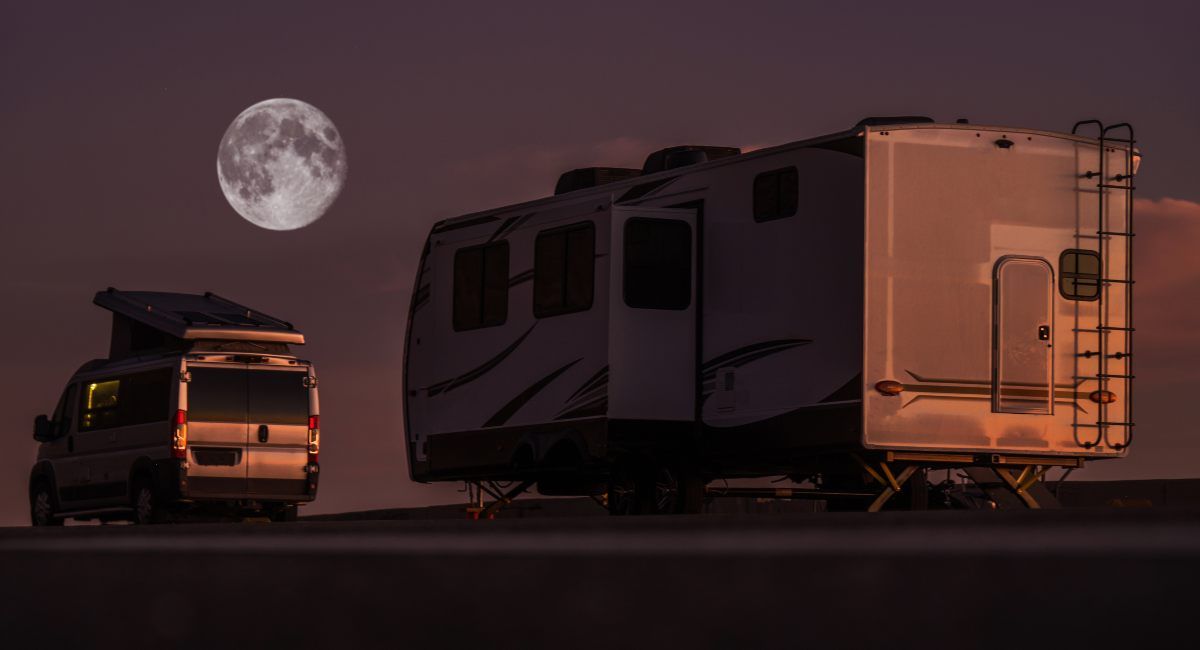
A fifth wheel is a towable RV that hitches to a horseshoe-shaped coupling mounted in the bed of a pickup truck, right over the rear axle. Its raised front section rides above the truck bed and usually holds a bedroom. The name traces back to the horizontal "fifth wheel" that helped horse-drawn carriages turn.
“Fifth-wheel” can allude to something other than your single friend who keeps tagging along on your double dates. In the world of campers, it refers to a type of RV that gives you the same benefits of a larger model without being a full-blown house on wheels. If you’re thinking of going in this direction — and have the right towing vehicle — a fifth wheel might be the perfect fit.
Fifth wheels at a glance
- What it is: a towable RV with a raised front that hitches into a pickup bed.
- Why the name: carriages used a flat, horizontal wheel above the front axle — a "fifth" wheel.
- Typical size: about 21 to 40 feet long, usually sleeping four to eight.
- Tow vehicle: most need a heavy-duty pickup; some midweight models suit half-ton trucks.
- Is it an RV? Yes — it's a towable RV, not a motorhome.
If you’re curious how the fifth wheel got its name and what makes them such a great RV option, continue reading! We’ve got answers to your questions and a few reasons why you should consider renting a fifth-wheel for your next great RV road trip.
What is a fifth wheel RV?
As it turns out, a fifth wheel does involve another wheel, but maybe not in the kind that you’re thinking.
Simply put, a fifth wheel is a hitch that allows the driver to connect a cargo attachment to the back of a large vehicle, like a tractor or truck. If you’ve seen a transport on the highway, then that’s a prime example of the fifth wheel design. Today, the fifth wheel refers to the “U” shaped coupling component found on the back of the towing vehicle, be it a large transport, pickup truck, or semi-truck.
The fifth wheel attachment, which is anchored in the bed of a pick-up truck.
Why is it called a fifth wheel?
The fifth wheel got its name from its original design on horse-drawn carriages and wagons. Those vehicles already had four wheels, so a carriage's flat, horizontal wheel above the front axle became the "fifth." It let the front axle pivot for turning while keeping the carriage from tipping. This worked wonders for stability and maneuverability.
Pivoting front axles go back a long way, and fifth-wheel devices were being made in the U.S. by 1837, with carriage makers refining the design through the 1800s.
In the early 1900s, a version was created for motor vehicles and the name itself simply carried forward. Herman G. Farr's "fifth-wheel construction" patent was filed in 1915 and assigned to Charles H. Martin, and the pair's rocking coupling helped make the modern semi truck. RV makers later borrowed the same truck-style coupling, which is why campers that use it are called fifth wheels — or "fivers" for short.
Is a fifth wheel an RV?
Yes. A fifth wheel is a towable RV, which means it has no engine of its own and rides behind a pickup instead of being driven like a Class A, B, or C motorhome. That's the main difference people mean when they ask about "an RV vs. a 5th wheel." Our guide to choosing your first RV class covers the drivable side of the family.
Here's what a typical fifth wheel looks like on paper, based on industry averages for 5th-wheel trailers:
- Length: about 21 to 40 feet
- Sleeps: usually four to eight
- Layout: a bi-level floor plan, with a bedroom or living area in the raised front
- Average new price: about $40,000 to $65,000
Most of the big RV manufacturers build at least one fifth-wheel line, from compact models to full-time-living rigs. In our experience, first-time renters are often surprised by how much the raised bedroom makes a fifth wheel feel like a small apartment.
Why choose a fifth-wheel RV?
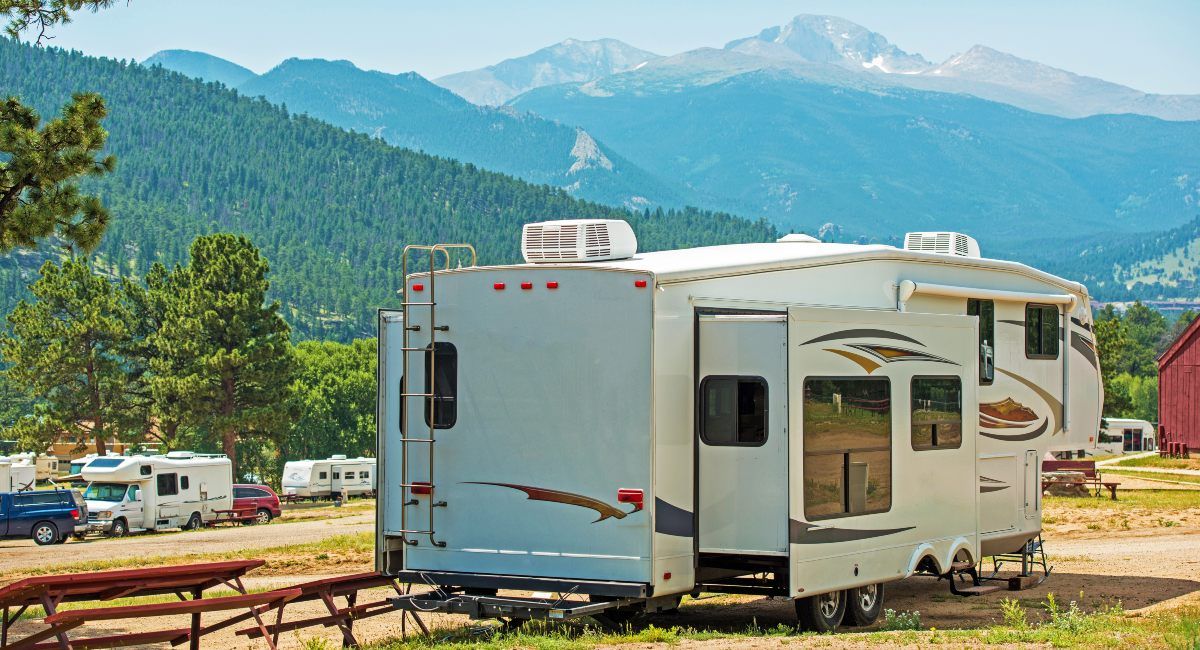
Fifth-wheel RVs offer several advantages over traditional travel trailers. Due to their hitch design, they are generally easier to tow and offer more living space. The raised forward section usually houses a bedroom or living area, maximizing square footage. Many fifth wheels also come with luxurious amenities like large kitchens, multiple slide-outs, and spacious bathrooms, making them ideal for extended trips or full-time living. If you're weighing the two side by side, our travel trailer vs. fifth wheel comparison breaks down cost, towing, and space.
Is a fifth wheel right for you?
The answer to this question depends on your comfort level, personal needs, and budget. If you’re still on the fence, consider the following:
1. The fifth wheel hitches are handy
Fifth-wheel hitches are handy because they facilitate turning, allowing you to drive normally with the attachment automatically following suit. The hitch, therefore, eliminates much of the cumbersome maneuvering that you’ll experience with a bumper pull. This is a tremendous advantage if you’re not extremely comfortable towing or if you plan on driving in parks with tight, winding roads.
2. Fifth wheels tow with less sway
The fifth wheel mechanism is sturdy and stable, even at highway speeds. Because the hitch sits over the truck's rear axle, it reduces trailer sway, a towing condition that is extremely dangerous. The hitch also better distributes the weight of the trailer and offers a more secure anchoring point. If you’re bringing children or other passengers, a fifth wheel can give you extra peace of mind. We've heard from plenty of renters that their first fifth-wheel tow felt calmer than they expected.
3. Your truck doubles as your daily driver
Once you've set up camp, you can unhitch and use your pickup for grocery runs, trailheads, and day trips — no need to break camp or tow a car behind a motorhome. Your truck will work harder on the highway and go through fuel faster while towing, so budget for that.
If you’re already the outdoorsy type — or happen to own a heavy-duty vehicle like a pickup truck — then you’re pretty much set to go. All you need to do is either buy or rent the “U” shaped attachment along with the trailer. If you don’t own a pickup, browse fifth-wheel rentals near you and look for hosts who offer RV delivery to your campsite, where the owner tows the trailer in and sets it up for you.
4. Larger groups can fit in a fifth wheel
These RVs are great for large groups. Despite the fact that they give up a small amount of space to accommodate the hitch, these RVs can still be quite large, generally ranging between about 21 and 40 feet. Most sleep four to eight, and some bunkhouse floor plans sleep up to 10 — great for newbie and veteran families alike. All you need is the right attachment and enough truck to pull the RV.
5. Fifth wheels are also great for solo campers
This type of trailer is equally great for solo travelers or sportspeople. Smaller models have plenty of space for storing equipment and other supplies and aren’t too hard for one person to operate and maintain. Check out these smaller fifth-wheel campers if you'd like something easier to tow.
Fifth-wheel RV towing tips
When towing a fifth-wheel RV, ensuring you have the right truck with the towing capacity to handle the weight is essential. Always check your vehicle’s tow rating and install a proper fifth-wheel hitch for safety. Be mindful of the height and weight of your fifth-wheel RV, especially on tight turns and around low-clearance areas.
Payload matters as much as towing capacity. A fifth wheel typically puts 15 to 25 percent of its weight on the kingpin, and all of that rides in your truck bed. Most fifth wheels need a full-size, heavy-duty pickup, though some midweight models can be towed by half-ton trucks. We've seen first-timers check only the tow rating and come up short on payload, so compare the loaded pin weight with the payload sticker in your driver's door jamb. Our pro tips for backing up a trailer help once you're hitched.
Give it a try
Of course, the only real way to see if this RV is right for you is if you try one out firsthand! Rent a fifth wheel from Outdoorsy and see how you like the towing, size, and amenities. Renters we talk to often say one weekend told them more than months of reading spec sheets.
About this guide
This guide was updated in November 2026 by the Outdoorsy Editorial team. Facts in this guide were checked against official and primary sources, linked throughout. Fifth-wheel weights and truck ratings vary by model and model year, so check the trailer's spec sheet and your truck's owner's manual before you tow or book.