
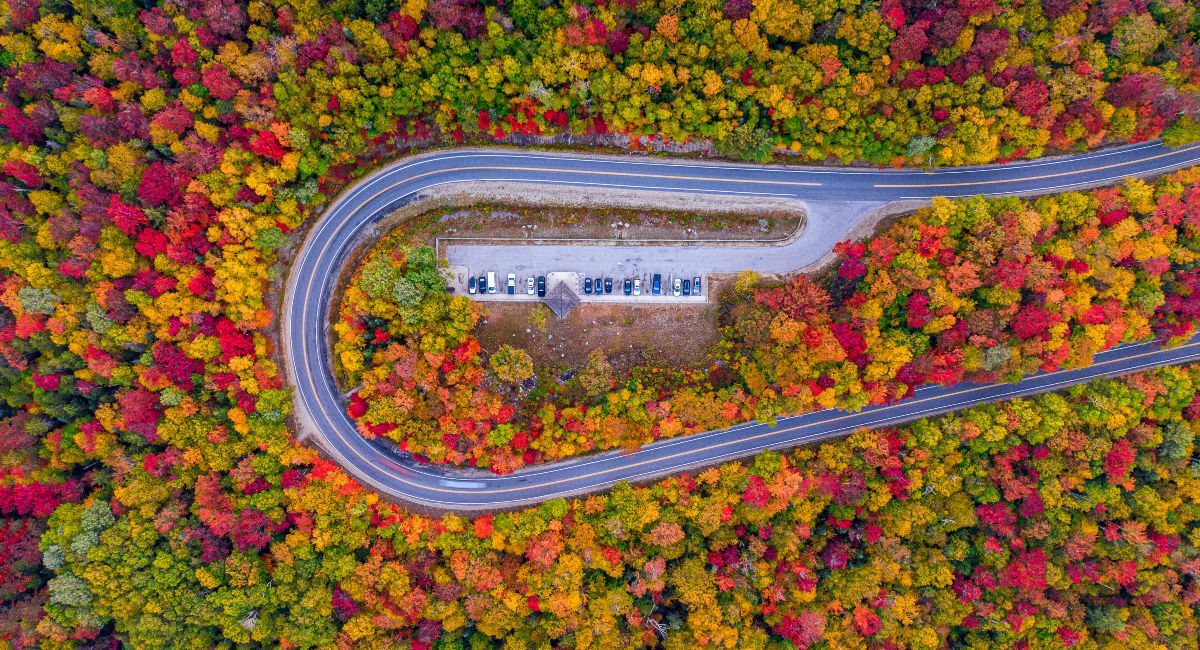
Fall color happens at different times in different places, and the SERP for "fall foliage road trip" is wall-to-wall car itineraries that ignore the question every RV renter actually needs answered: which scenic drive fits your rig, and which fall campgrounds have hookups for the cold nights. This guide builds the planning around the calendar — late September up north, mid-October New England and Acadia, late October into November in the Smokies — and adds the RV-specific layers (fit, booking, cold) that decide whether the trip works.
The short version:
- Color peaks at different times by region: late September in northern New England and the Upper Midwest; mid-October across most of New England and Acadia; late October into November in the Smokies and Blue Ridge.
- Book campgrounds the day the six-month window opens. October is one of the busiest months for RV travel, and peak-week sites at popular foliage parks vanish in minutes.
- Many fall campgrounds have no hookups and drop into the 40s°F overnight. Plan propane heat, battery, and generator quiet hours.
- Signature drives have RV size limits. Skyline Drive's Mary's Rock Tunnel caps at 12'8"; the Blue Ridge Parkway has 26 tunnels with varying clearances; Pierce Stocking in Michigan bans trailers and caps at 13'6".
- Want the color without the cliff-road driving? Have a rig delivered to a foliage-season campground.
When does fall foliage peak and how do you track it?
Color moves south and downhill through the season. The earliest peaks (late September) hit northern New England (parts of Vermont, New Hampshire), the Upper Midwest, and the Adirondacks. Mid-October is prime time across central New England, Acadia, the Hudson Valley, and the Pennsylvania mountains. Late October into early November brings peak to the Mid-Atlantic, Shenandoah, and the Smokies/Blue Ridge corridor.
In our experience, the renters who nail fall color don't chase "autumn" — they pick a region by week and book the campground before the foliage even turns. The trick is reading the elevation map: high elevations turn first, valleys last, even within a single region. Acadia's Cadillac area peaks the third week of October; the Cades Cove valley in the Smokies the first week of November.
Renters we hear from who book peak weeks consistently say tracking and timing matters more than picking the "best" region — getting the right region a week late beats the wrong region at peak.
Five tracking tools that actually work:
- smokymountains.com Fall Foliage Map. Predicts peak weeks by county; updates through the season. Useful even outside the Smokies.
- NPS park social feeds. Acadia, Shenandoah, the Smokies, and Blue Ridge Parkway all post weekly color updates from rangers.
- State tourism foliage maps. Vermont, New Hampshire, Maine, North Carolina, and Tennessee all publish weekly state-level updates.
- Park webcams. Acadia's Cadillac webcam, the Smokies' Kuwohi webcam, and others show real-time color.
- News search by year. Google News for "fall color [region] 2026" surfaces ranger interviews and updated peak windows weekly.
What's the best fall foliage road trip route for an RV?
Pick by your travel window. New England (mid-October) is the strongest fall foliage region by reputation and access; Shenandoah/Skyline Drive (mid-to-late October) is the Mid-Atlantic anchor; the Blue Ridge Parkway and Smokies (late October into November) carry the season into the South. A national leaf-peeping trip threads these in sequence — start in northern New England, work south.
Fall foliage road trip by week: where to be, and when
- Late September — Northern New England / Upper Midwest. Base in Stowe, Vermont or Mackinaw City, Michigan. Drive Smugglers' Notch or the Tunnel of Trees on M-119.
- First week of October — Vermont and western New Hampshire. Base in Killington, Vermont or North Conway, New Hampshire. Drive the Kancamagus Highway and Mt. Washington.
- Second week of October — Central/Southern New England and Acadia. Base in Bar Harbor, Maine or Lenox, Massachusetts. Drive Acadia's Park Loop Road or the Mohawk Trail.
- Third week of October — Hudson Valley and Pennsylvania mountains. Base in the Catskills, New York or Jim Thorpe, Pennsylvania. Drive along the Hudson River or through the Pocono ridges.
- Late October — Shenandoah. Base in Front Royal or Luray, Virginia. Drive the full 105-mile Skyline Drive, top to bottom.
- First week of November — Blue Ridge Parkway and Smokies valley. Base in Asheville, North Carolina or Gatlinburg, Tennessee. Drive the Blue Ridge Parkway or Newfound Gap Road.
For region-specific depth, our Smoky Mountains autumn guide handles the timing for the Smokies leg, and our Acadia RV camping guide covers the mid-October peak booking. The our roundup of the best fall foliage road trips covers more regional itineraries.
Common pickup hubs by region: rent an RV in Maine for a New England leaf run, Asheville for the Blue Ridge Parkway, and the broader road trip guides hub for the wider browse.
How far ahead do you book RV campgrounds for foliage season?
Six months ahead, the morning the window opens. Most NPS and state-park campgrounds use a six-month rolling reservation window on Recreation.gov or each state's equivalent. For peak-week sites at popular foliage parks (Acadia, Shenandoah, Smokemont, Stowe-area private parks), you need to be online at release time. Wait a week and the prime sites are gone.
The release-window math for the most-asked foliage regions:
- Acadia (Maine). Recreation.gov, 6 months ahead at 10 a.m. EST on the 1st. For a third-week-of-October arrival, that's April 1.
- Shenandoah (Virginia). Recreation.gov, 6 months ahead. For late-October stays, May release.
- Smokies (Tennessee / NC). Recreation.gov, 6 months ahead at 10 a.m. EST. For first-week-of-November stays, May 1 release.
- State parks (Vermont, New Hampshire). Vary; many use 9- to 11-month windows on state systems (ReserveAmerica, etc.). Book even earlier than NPS for the highest-demand New England sites.
- Private foliage-season parks (KOAs in foliage country). Usually 12 months ahead or earlier for peak weeks.
A few specifics worth knowing:
- Cancellations stay alive late. Even when the official window is gone, last-minute cancellations open up two to three weeks before arrival. Set a Recreation.gov alert.
- Weekday-vs-weekend matters more in fall than any other season. Sunday–Thursday stays often have availability when Friday–Saturday is gone.
- Stretch the trip. Booking a six-day stay across two campgrounds (e.g., three nights at one, three at another) opens more options than a six-night single-site reservation.
We've heard from leaf-peepers who white-knuckled a 35-foot rig down a winding parkway and wished they'd rented smaller or towed a car for the scenic drives. The size mistake is real for fall trips.
Can you drive a big RV on the scenic fall drives (Skyline Drive, Blue Ridge Parkway)?
Maybe, and the answer depends on the specific drive and tunnel heights. Skyline Drive's Mary's Rock Tunnel caps at 12'8" clearance. The Blue Ridge Parkway has 26 tunnels along its 469 miles, with varying heights — some as low as 11 to 12 feet on the southern (NC) sections. Pierce Stocking Scenic Drive at Sleeping Bear Dunes bans trailers entirely and caps at 13'6" clearance. M-119 Tunnel of Trees in Michigan is famously narrow and the small-rig favorite.
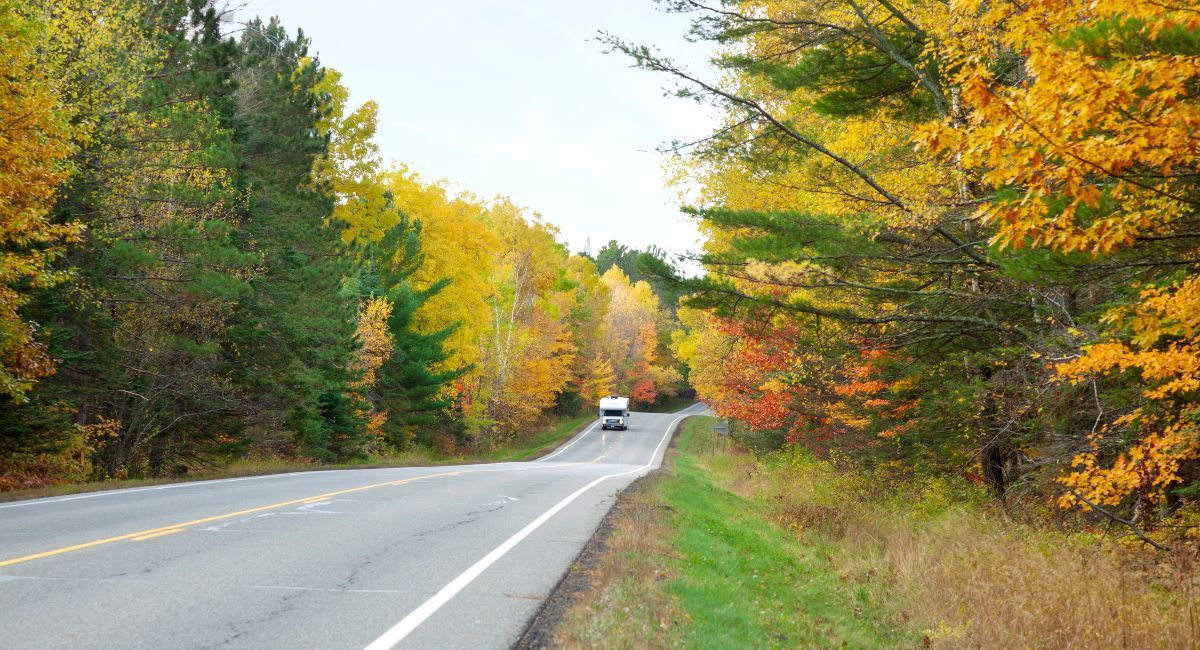
RV size limits on the 8 most popular fall scenic drives
- Skyline Drive (Shenandoah, VA), 105 miles. Fits rigs up to about 12'8" tall, under 30 feet recommended. Mary's Rock Tunnel at mile 32.2 is the binding clearance for the whole drive.
- Blue Ridge Parkway (VA + NC), 469 miles. Clearance varies by tunnel — most sections clear anything under 11 feet, and some sections handle big rigs. There are 26 tunnels total; check heights for the North Carolina sections specifically before you commit.
- Kancamagus Highway (NH), 35 miles. No tunnels, a wide road — any reasonable RV size works here.
- Pierce Stocking Scenic Drive (MI), 7.4 miles. No trailers allowed, and a hard cap of 13'6" clearance. It's a one-way, seasonal loop.
- M-119 Tunnel of Trees (MI), 20 miles. Small rigs only — Class B, Class B+, or a small Class C. The road is famously narrow with no shoulders.
- Acadia Park Loop Road, 27 miles. Fits rigs up to about 12 feet wide with a modest length; some sections are one-way. Standard NPS road otherwise.
- Mohawk Trail (MA), 63 miles. Any reasonable RV size — a standard state highway.
- Newfound Gap Road (Smokies), 33 miles. Any reasonable RV size — a standard NPS road.
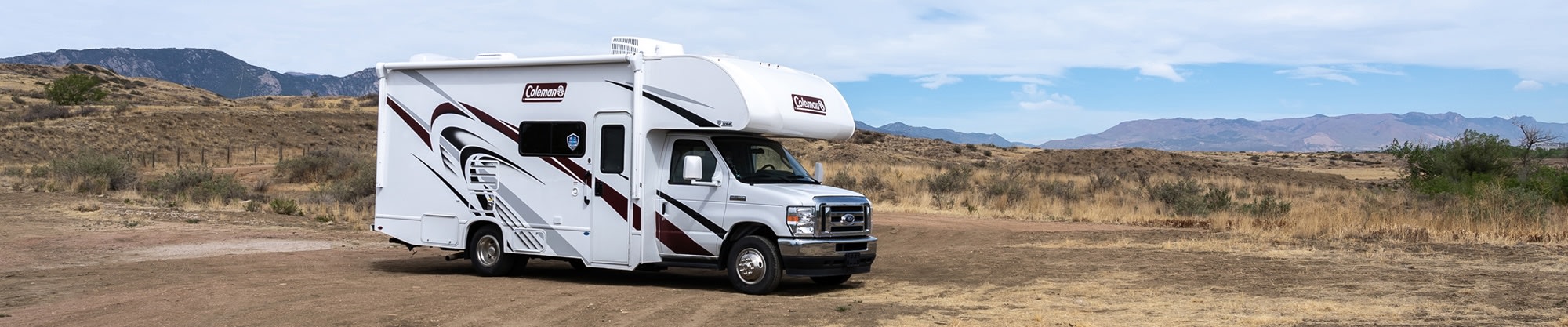
The clean read: rent under 12'6" tall and under 30 feet long for full access to every drive on this list. Class B campervans clear everything; smaller Class C motorhomes handle Skyline Drive and most of the Blue Ridge Parkway. Anything over 35 feet starts losing access to specific tunnels and tight curves — workable, but check ahead.
If sizing is the worry, a smaller rig for the winding parkways is the clean fix. Towing a car to base the rig at a campground and explore the scenic drives in the smaller vehicle is the next-best workaround.
How do you plan for cold, no-hookup fall nights?
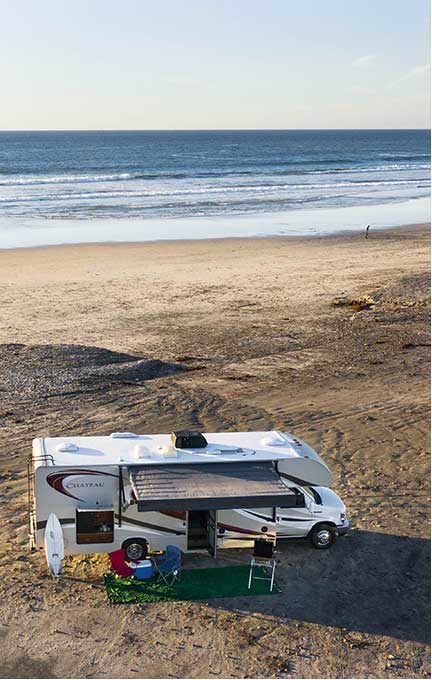
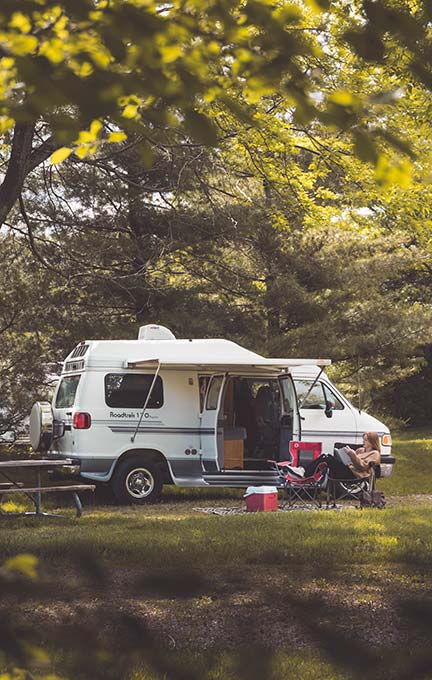
Plan propane, battery, and the 8 p.m.–8 p.m. generator quiet hours like a winter trip, not a summer one. Many in-park fall campgrounds (Acadia's Blackwoods, the Smokies' Smokemont, Shenandoah's Big Meadows) have no electric hookups, and overnight lows drop into the 40s°F at elevation. Without a plan, the rig is cold by 10 p.m.
Renters we talk to assume foliage campgrounds have hookups; the cold, dry-camping nights are the part that surprises them, not the drive. The setup that works:
- Propane: A full 20-lb tank runs the RV furnace 5–8 nights at moderate temps. Top off before the trip; one mid-trip refill is usually enough for a week.
- House battery: The furnace fan needs 12V power even though the heat is propane. Charge fully at pickup; consider a quiet inverter generator for daytime top-up.
- Generator quiet hours: 8 a.m.–8 p.m. at most NPS campgrounds. Run before dinner; don't run overnight.
- Layered bedding: Warm sleeping bag or wool blankets bridge the gap. Furnace runs cooler, propane lasts longer.
- Water lines: If overnight lows dip below 32°F, RV water lines can freeze. Disconnect the fresh-water hose at night and use your fresh tank.
- Window insulation: Reflectix panels in the front windshield and cab windows cut radiant heat loss by 30–40%. Cheap upgrade for cold nights.
The other option: skip the dry-camping entirely and stay at private full-hookup parks in foliage gateway towns (Stowe VT, North Conway NH, Bar Harbor ME, Asheville NC, Gatlinburg TN). You'll pay $50–$90/night vs. $25–$35 in-park, but you'll have shore power, heat, and a hot shower.
If the cold-night setup feels like more than you want to manage, have an RV delivered to a foliage-season campground — the host levels and hooks up the rig at a gateway full-hookup park before you arrive. Our RV rental delivery guide covers the cost.
Key takeaways
- Color peaks late Sept (north) → mid-Oct (NE/Acadia) → late Oct/early Nov (Smokies/Blue Ridge).
- Book the day the 6-month window opens on Recreation.gov for the busiest fall parks.
- Skyline Drive caps at 12'8" (Mary's Rock Tunnel); the Blue Ridge Parkway has 26 tunnels with varying heights; M-119 Tunnel of Trees is small-rig only.
- Many fall campgrounds are no-hookup. Plan propane, battery, and generator quiet hours.
- Gateway full-hookup parks or RV delivery skip the cold-night setup.
About this guide
This guide was prepared by the Outdoorsy editorial team. The regional peak-color windows, the Skyline Drive Mary's Rock Tunnel 12'8" clearance, the Blue Ridge Parkway 26-tunnel count, and the Pierce Stocking Scenic Drive restrictions were verified on June 12, 2026 against primary National Park Service sources: the NPS Skyline Drive driving page, the NPS Mary's Rock Tunnel page, the Blue Ridge Parkway FAQ, the Pierce Stocking Scenic Drive page, and the NPS Smokies fall color page. Foliage timing varies year to year — check current ranger updates the week of your trip.