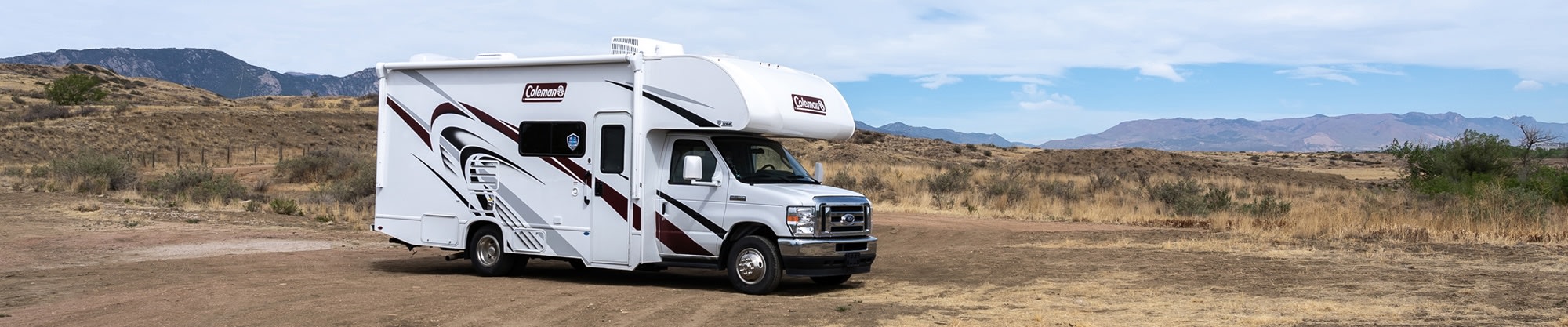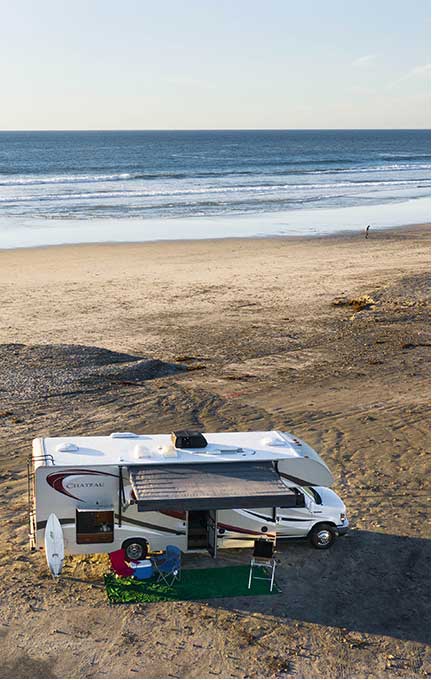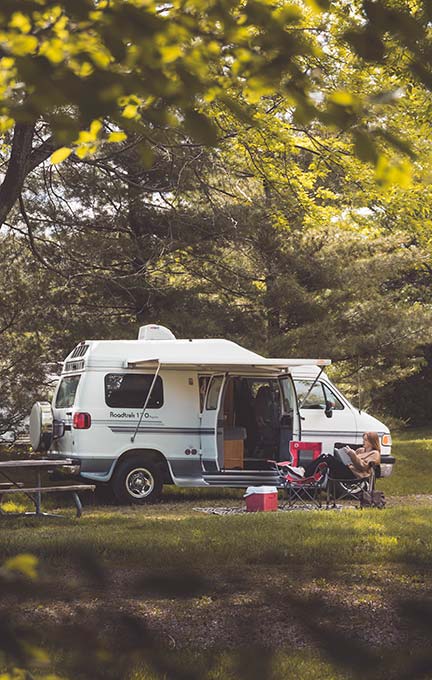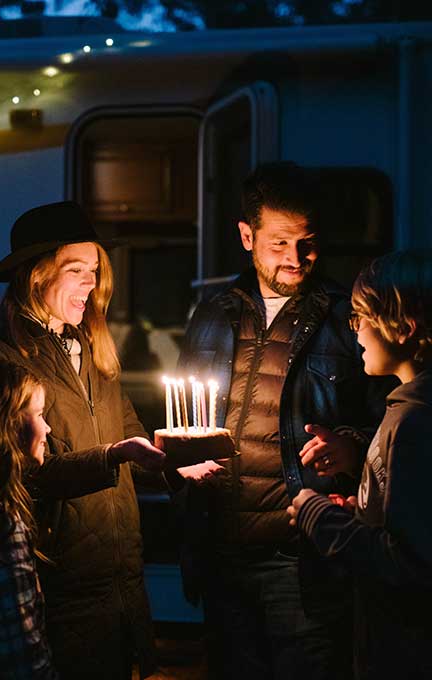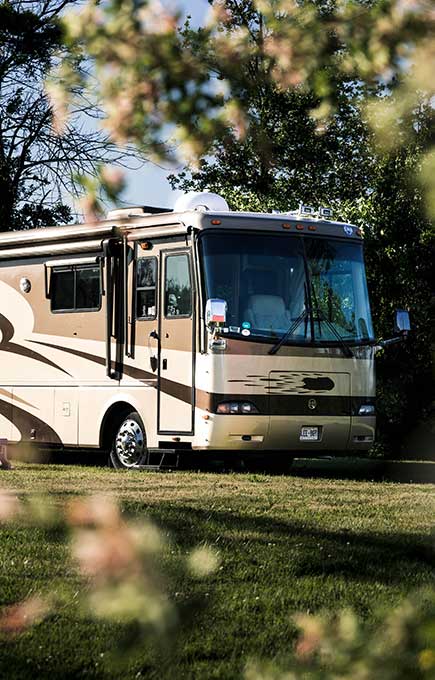

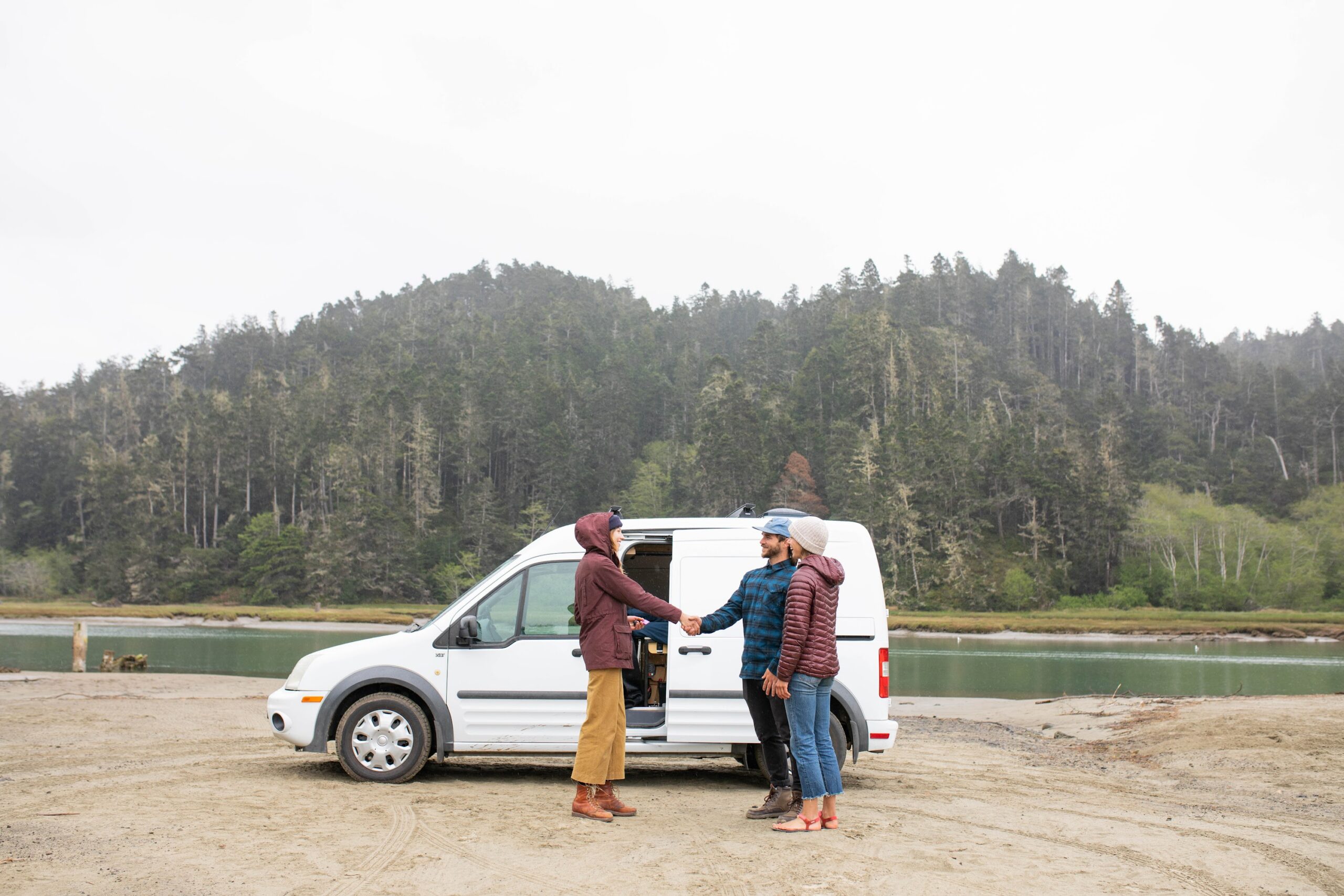
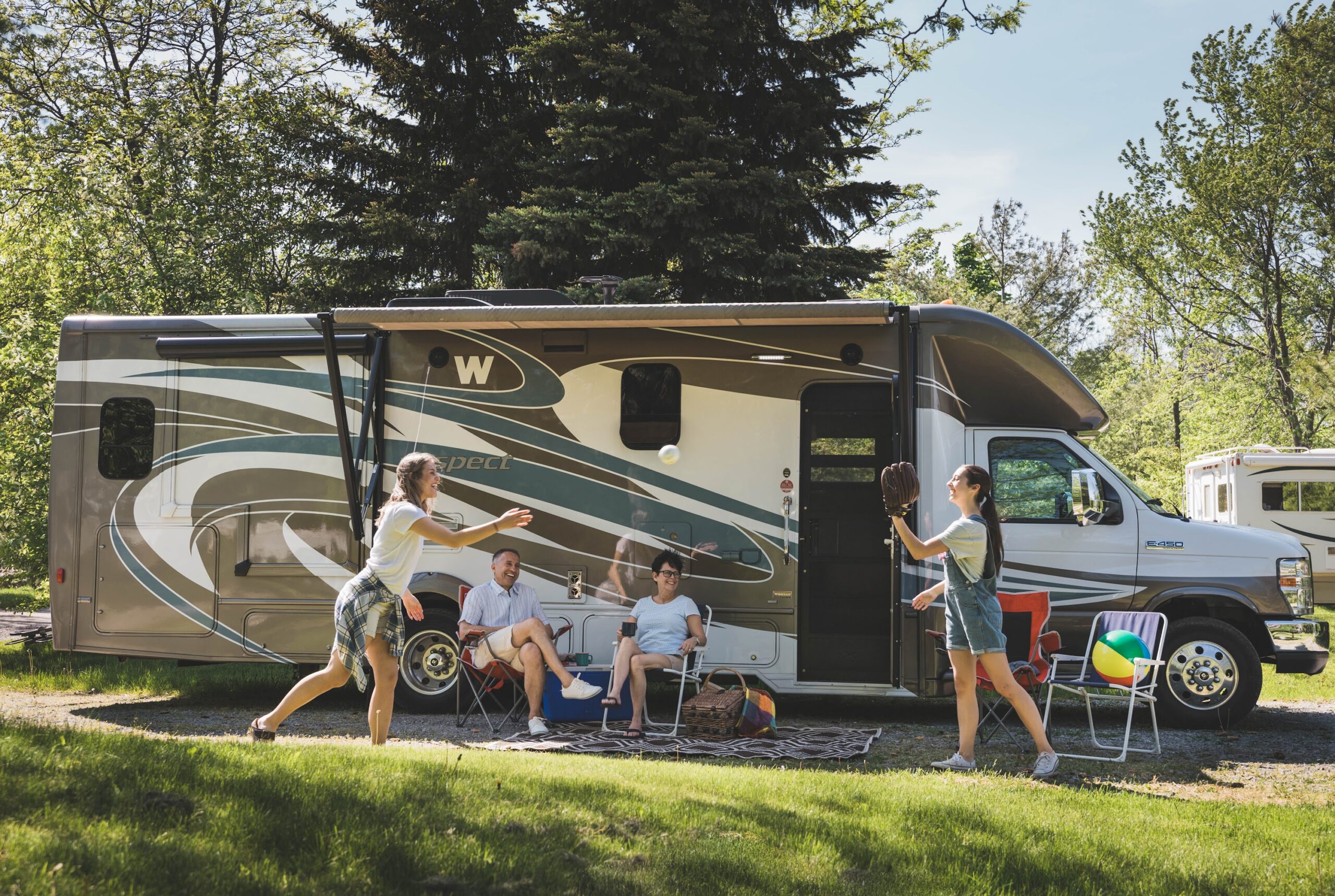
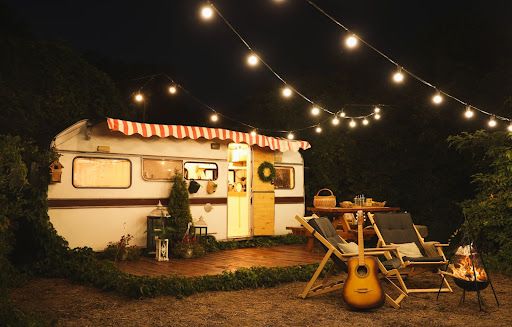

A summer RV vacation is the best version of a family vacation, full stop — and the most-stressful one to plan if you wait too long. Peak summer at the marquee national parks is won at the reservation desk six months ahead of arrival, not at the gate the morning of. This guide is built for families who want a great summer trip without the booking panic, the gate-of-Yellowstone traffic jam, and the midday heat that catches first-time renters off guard.
The short version:
- Book early. Peak-summer national-park campgrounds open on Recreation.gov six months ahead and fill within hours.
- Beat the crowds with a 6 a.m. gate arrival and a two-base strategy at big parks.
- Pace travel days around naps and avoid midday heat — never leave pets in a parked RV or at camp in extreme heat.
- Do the honest cost math. RV can beat flights + hotel for a family of four — but not always.
- Nervous about driving in peak traffic? Delivery sets the rig up at a campground for you.
When should you book summer RV campgrounds?
Six months ahead, the morning your specific arrival date's window opens at 10 a.m. EST on Recreation.gov. For a July 4 arrival, that's January 4. For Labor Day, that's March 1. Private resorts (KOA Holiday, Jellystone) often open even earlier — many at 12 months ahead. Holiday weekends sell out within minutes of release; off-peak summer (mid-June, early August, Sunday–Thursday) has more availability.
In our experience, the families who enjoy summer parks most are the ones who booked in the winter and showed up at the gate before breakfast. We've watched the long campsites disappear within hours of the six-month window opening — summer is won at the reservation desk.
A working booking-calendar for summer 2026 / 2027:
- For a summer 2026 trip: if you haven't booked yet, focus on cancellations. Set Recreation.gov alerts for your specific dates; cancellations open up two to three weeks ahead at most parks.
- For a summer 2027 trip: mark your calendar for the 6-month release date for your specific arrival, plus the 12-month date for private resorts. Be online at 10 a.m. EST sharp on release morning.
- For Yellowstone, Glacier, Grand Teton, Acadia, the Smokies: Saturday arrivals during July 4 week are the hardest to land. Sunday or Tuesday arrival is easier.
- For private resorts: booking a year ahead is the norm at the best family parks (Cherry Hill MD, Door County KOAs, Pigeon Forge/Gatlinburg KOA).
For the campground-by-campground picture, the best family campgrounds covers picks across the country.
How do you beat the summer crowds at national parks in an RV?
Three working strategies: arrive at the park gate by 6 a.m. (parking opens up before the day-trippers arrive), shift to the shoulder weeks (mid-June or late August beat July), and use a two-base strategy at sprawling parks like Yellowstone (West Yellowstone and Gardiner) so you're never fighting cross-park traffic.
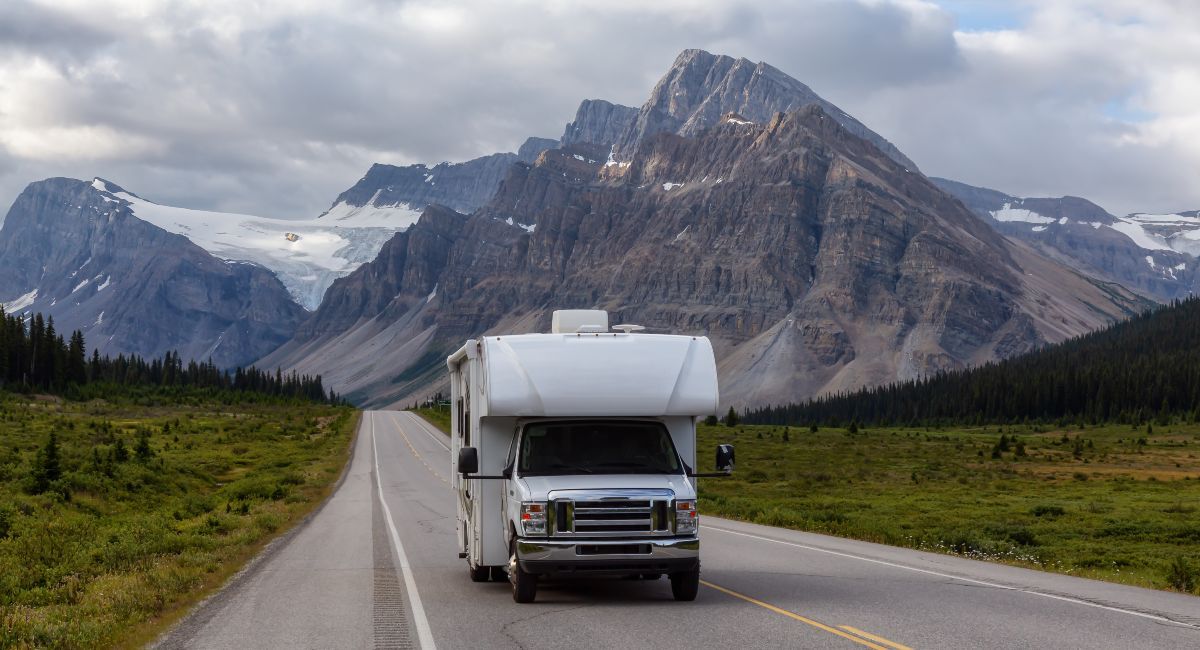
The crowd-beating playbook:
- 6 a.m. gate. At Yellowstone, Glacier, Zion, and Acadia, parking at Old Faithful, Logan Pass, Angels Landing trailhead, and Sand Beach can be full by 8 a.m. on a peak summer day. Arrive at 6 a.m., park easily, hike early when temps are cool.
- Sunday–Thursday over Friday–Sunday. Weekend crowds at most parks are 30–50% heavier than weekday crowds, especially at the marquee viewpoints.
- Two-base strategy. At Yellowstone: Bridge Bay for the southern half (Old Faithful, West Thumb), Mammoth or Canyon for the north (Mammoth Hot Springs, Lamar). At Grand Teton: Colter Bay for the north, Gros Ventre for the south.
- Lesser-known parks. North Cascades, Great Basin, Mesa Verde, Black Canyon of the Gunnison, North Rim of the Grand Canyon — all offer national-park-level beauty with a fraction of the visitor count.
- High-elevation parks stay cooler. Bryce, Crater Lake, Lassen, and Glacier all peak at 7,000+ ft and run 10–15°F cooler than valley parks in July.
For the wider browse, the summer-friendly national parks index covers the parks themselves, and summer road trip ideas covers the routes.
How many miles a day should you drive with kids in summer heat?
Cap travel days at the 3-3-3 rule (300 miles max, arrive by 3 p.m., stay 3 nights), and drive during naps when possible. In the desert Southwest, add a hard heat rule: don't drive after 11 a.m. or before sunset in July or early August. The midday heat inside a moving RV is exhausting for adults and miserable for kids.
Renters we talk to who traveled in July say the heat, not the driving, was the hard part — they wish they'd planned the afternoons around shade and naps.
The summer-specific pacing layer:
- Early start, midday break, late afternoon arrival. Drive 6 a.m. – 11 a.m., park in shade or at a campground with A/C, sit out the heat, do the afternoon's drive 4 p.m. – 7 p.m. if any remains.
- Two-hour cap for kids under 6. The 2-2-2 rule (drive ≤2 hours, arrive by 2 p.m., stay 2 nights) is what families with toddlers and preschoolers adopt.
- Never leave pets in a parked RV in the desert. Temperatures inside can hit 130°F in 15 minutes on a 95°F day — lethal in under an hour. Plan all in-park activities to keep pets with you or in air conditioning.
- Hydration is a real constraint. Each person needs 1 gallon of water per day in the desert; rigs use 5–10 gallons of fresh water per person per day for cooking, dishes, and showers. Fill the fresh tank at every opportunity.
For deeper family pacing guidance, the best RV trips for families covers the 3-3-3, 4-4-4, and 2-2-2 rules and per-destination rig pairings.
Where should you take a family RV trip in summer?
Pick by your region's heat tolerance and travel window. High-elevation parks (Yellowstone, Glacier, Grand Teton, Crater Lake) stay 10–15°F cooler than the lowland West. Coastal parks (Acadia, the Outer Banks, Olympic) get ocean breezes. Lake-and-forest trips (Door County, Northern Wisconsin, Vermont) split the difference. Avoid the desert Southwest (Arches, Capitol Reef, Joshua Tree) in July and August — the 100°F+ days make hiking dangerous.
A short list by family fit:
- Yellowstone + Grand Teton (mid-June to mid-September). The American family classic. Crowds peak July; mid-June and late August are calmer. Smaller Class C (under 32 ft) fits most NPS sites.
- Glacier National Park (July through September). Going-to-the-Sun Road has a 21-ft RV size limit on the middle section — rent small or plan around it. Stunning, less crowded than Yellowstone.
- Acadia + Maine coast (August). Ocean breezes, short kid-friendly hikes. Schoodic Woods has electric on most sites — the most family-friendly Acadia campground.
- Door County, WI (July–August). Lake Michigan, cherry country, full-hookup parks. Easy driving and kid-friendly amenities everywhere.
- The Outer Banks NC (June or September). Beach base; full-hookup parks; family-resort tier amenities. Skip July–August at peak heat and crowd density.
- Black Hills + Badlands (June or September). Mount Rushmore, Custer State Park's wildlife loop, Badlands. Cooler than the Southwest in summer.
Browse what a summer rental costs to size the budget; skip peak-season driving with delivery if driving the rig through summer traffic isn't appealing.
Is renting an RV cheaper than a summer flights-and-hotel vacation?
For a family of four taking a 7-day summer trip, the RV bundle often beats flights + hotel by — if you stay within driving distance of the pickup city and pick mid-tier campgrounds. The big swing factors: food (cooking on board saves money vs. restaurants) and lodging (campground vs. hotel is the biggest single difference).
The RV bundle wins decisively for groups or families. Two more factors that often flip the math:
- Outdoorsy delivery changes the rent-vs-fly calculus. Fly to a gateway airport, rent a car for park days, have a self-contained rig delivered to a full-hookup campground. The RV-as-base model often beats both options at family size.
- Free BLM boondocking (in the West) drops the campground bill to zero on selected nights, reshaping the math for southwest summer trips.
Key takeaways
- Book at 6 months ahead on Recreation.gov for NPS sites; 12 months ahead for the best private resorts.
- Beat crowds with the 6 a.m. gate, Sunday–Thursday stays, and a two-base strategy at big parks.
- Cap travel days at 3-3-3 (or 2-2-2 with toddlers) and don't drive midday in the desert.
- High-elevation, coastal, and lake-and-forest destinations are the summer comfort zones. Avoid the Southwest desert.
- RV bundle often beats flights + hotel for a family of four within driving distance; delivery shifts the math for longer-distance summer trips.
About this guide
This guide was prepared by the Outdoorsy editorial team. The summer booking windows, two-base park strategies, 3-3-3 / 2-2-2 pacing rules, and per-destination heat tolerance were verified on June 12, 2026 against the Recreation.gov gateway pages for the marquee parks, NPS park sites (Yellowstone, Grand Teton, Glacier, Acadia, the Smokies), and Outdoorsy editorial experience. Summer trip planning specifics change every year — confirm peak-season operating hours, gate access, and reservation policies before booking.