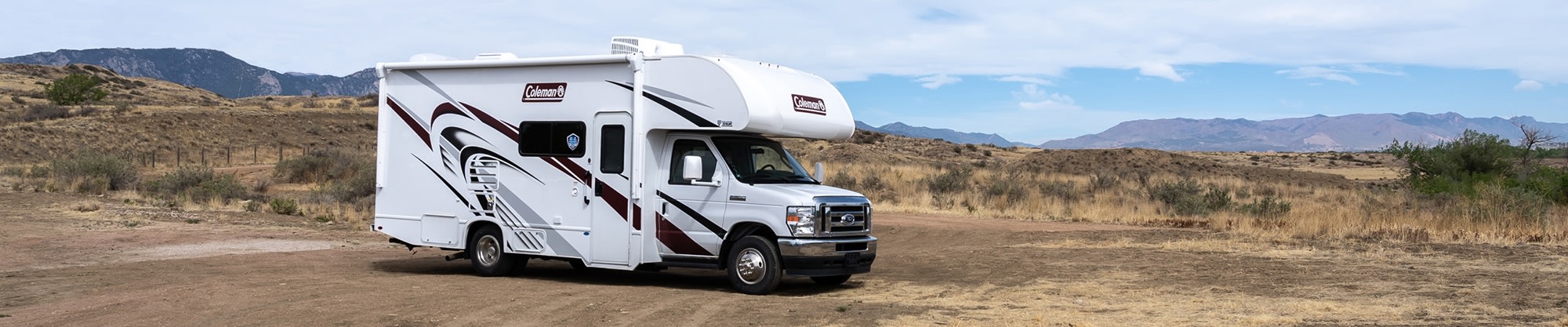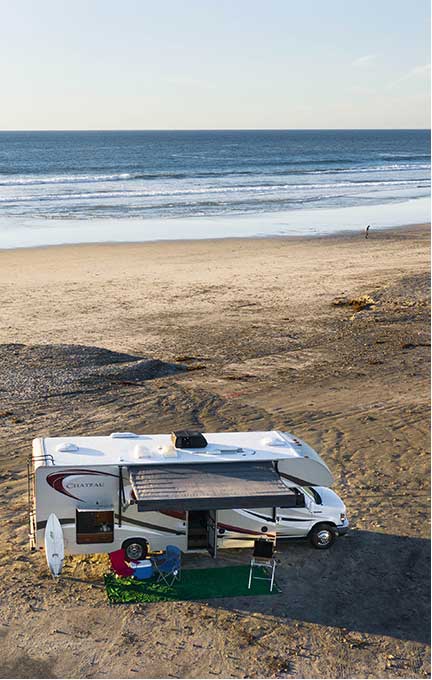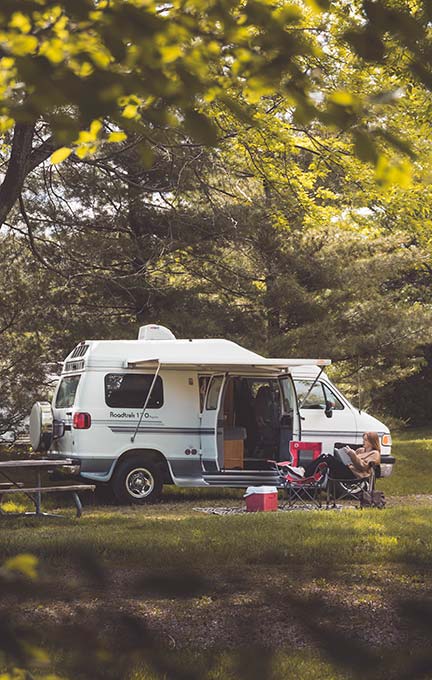

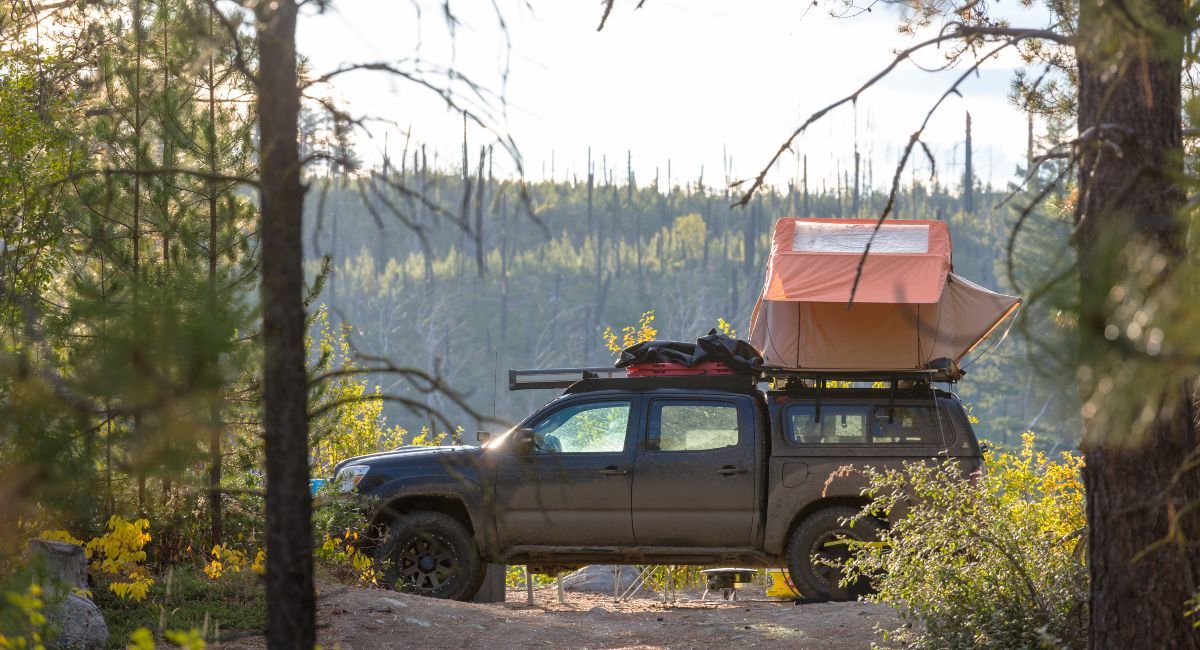
A truck bed camper is a self-contained camper that loads into or onto the bed of a pickup truck, turning the truck into a go-almost-anywhere RV. Truck campers sleep two to six, handle gravel and forest roads better than most RVs, and come off the truck at camp so you can drive to the trailhead. The catch: the camper has to match your truck's payload. This guide covers the types, the payload math, what life inside is really like, and how renting one works.
In Brief
- What it is: a camper that rides in or on a pickup's bed — no trailer to tow.
- Four main types: hard-side slide-in, pop-up, flatbed, and camper shell (topper) setups.
- Payload is rule No. 1. Find it on the sticker in the driver's door jamb and keep the loaded camper under it.
- Best for: one or two travelers, backroads, and boondocking on public land.
- Try before you buy. New truck campers start around $12,400 and run past $60,000.
What is a truck bed camper?
A truck bed camper is an RV that sits in or on a pickup truck instead of being towed behind it. Go RVing defines truck campers as "portable units designed to be loaded onto, or affixed to, the bed or chassis of a pickup truck," sleeping two to six. Most have a bed over the truck cab, a small kitchen, and storage.
Because the camper rides on the truck, you get the maneuverability of a pickup with a bed, stove, and roof at the end of the day. Most units sit on jacks so you can unload the camper at a campsite and use the truck on its own. RVers we talk to call that the best part — you can leave the camper at the campsite and drive around with just the truck.
People search for both "truck camper" and "truck bed camper." They mean the same thing; "slide-in" describes the most common style.
What types of truck campers are there?
Truck campers come in four main styles: hard-side slide-ins, pop-up campers with fold-up canvas walls, flatbed campers that mount on a flat deck, and camper shells or toppers with a basic sleeping setup. They differ mostly in weight, comfort, and the truck they need.
Hard-side slide-in campers
These are the classic truck campers: solid walls, a cab-over bed, a kitchen, and often a wet bath. Some have slide-outs. They're the most house-like and the heaviest. Truck Camper Magazine lists the compact 2026 Lance 650 at 1,694 pounds dry and an MSRP of $30,443, while the double-slide Lance 1172 weighs 4,063 pounds dry.
Pop-up truck campers
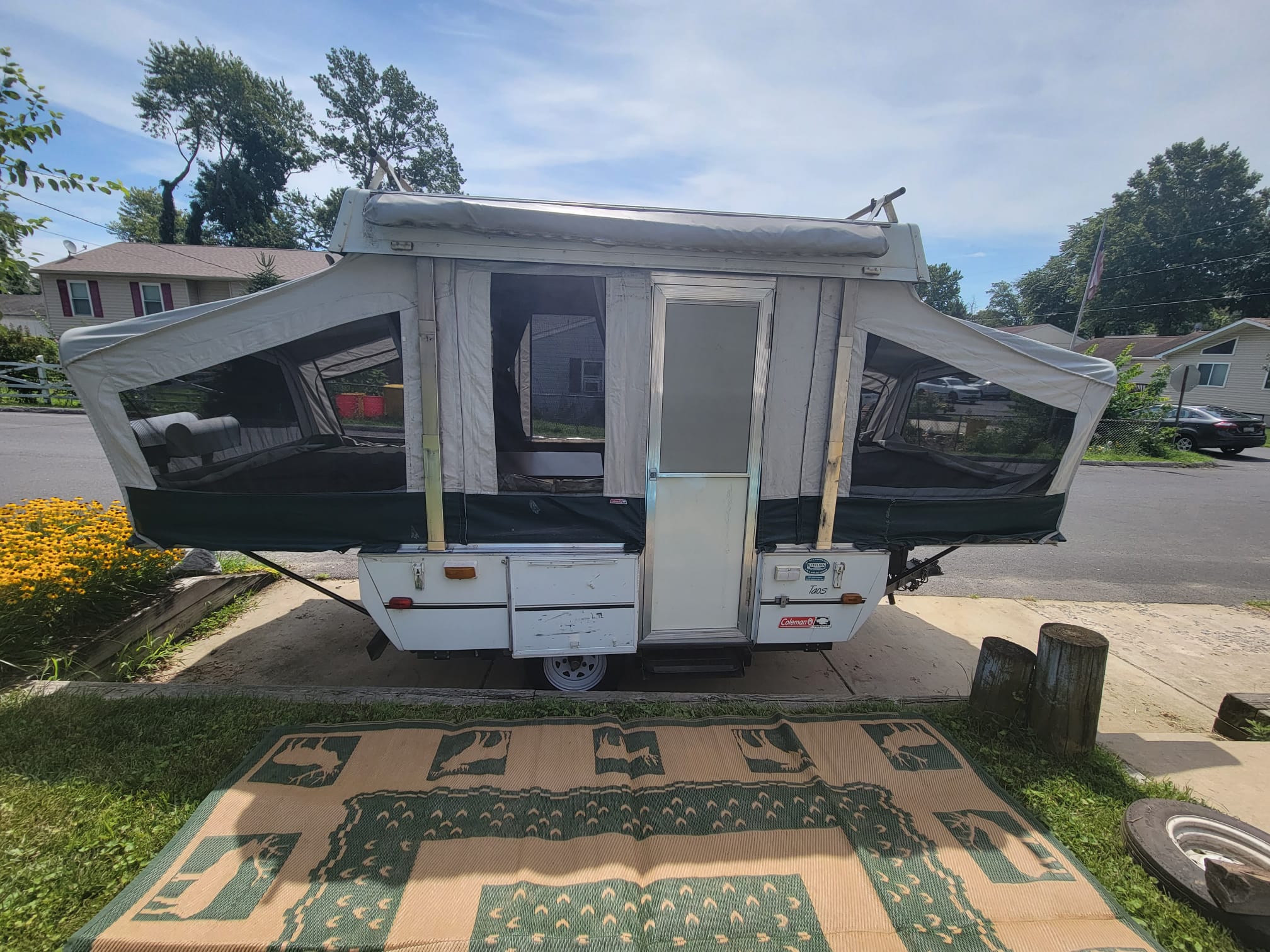
Pop-ups have a hard lower body and a roof that lifts on canvas sides. Lowered, they ride low behind the cab, which cuts wind resistance and keeps the center of gravity lower off-road. Four Wheel Campers' Hawk pop-up lists a base dry weight of about 1,200 pounds, 20 gallons of fresh water, and base models starting at $19,995. What we've found is that pop-ups win over renters who care more about where they can go than how much room they have inside.
Flatbed campers
Flatbed models mount to a truck with the factory bed removed and a flat deck in its place. They're wider inside and popular with overlanders, but they require a truck set up for them.
Camper shells and toppers
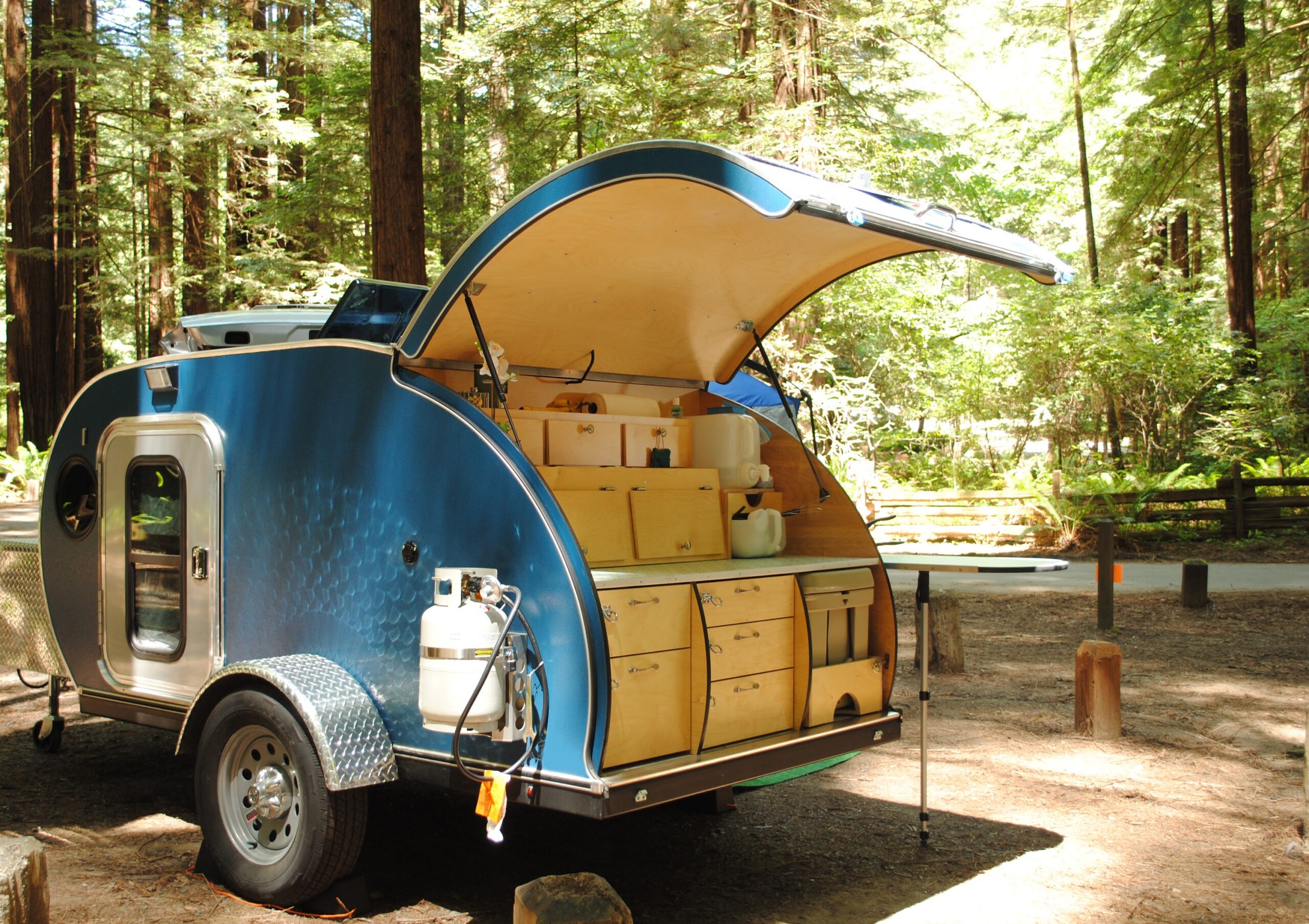
A topper or camper shell is the simplest option: a cover over the bed with room for a sleeping platform. Some newer toppers include pop-up roofs. They're light and affordable but offer little more than a bed.
Will a truck camper fit your truck?
A truck camper fits your truck only if its loaded weight stays under your truck's payload rating. Find the payload on the Tire and Loading Information sticker in the driver's door jamb, then add the camper's weight, water, gear, and passengers. Bed length also has to match.
The National Highway Traffic Safety Administration says that on new vehicles, this label is located on the driver's side doorjamb, and the federal placard rule requires it to state that "the combined weight of occupants and cargo should never exceed" a specific number. There's even a federal rule just for this pairing: 49 CFR 575.103 tells buyers to add up the camper's weight, cargo, passengers, and options, then "select a truck that has a cargo weight rating that is equal to or greater than the total cargo load of the camper."
Dry weight is only the starting point. Four Wheel Campers' own guide warns that "a camper with a 1,200 lb dry weight can easily become a 2,000 lb load" once you add water, propane, food, and gear — and notes that hard-side campers from other makers usually demand three-quarter-ton or one-ton trucks.
We've watched renters skip the door-jamb sticker and trust the camper's brochure weight instead. RVers we talk to describe an overloaded, top-heavy setup as making the truck "wallow" on curves — not the feeling you want on a mountain pass. A quick checklist:
- Payload: from the door-jamb sticker for your exact truck.
- Camper wet weight: dry weight plus water, propane, and options.
- People and gear: everyone in the truck plus coolers, bikes, and firewood.
- Bed length: short or standard bed (about 5 to 6.5 feet) vs. long bed (about 8 feet).
- Tie-downs: slide-ins are secured with turnbuckles to tie-downs that attach to the truck's frame.
Who is a truck camper best for?
Truck campers suit one or two people (or a couple with a small kid) who want to reach rough roads, remote trailheads, and dispersed campsites. If you want lots of living space, a campervan or travel trailer usually fits better. Here's how they compare for a renter:
- Truck camper — Sleeps: 2–6 (best for 2); Rough roads: Best, with 4WD; Leave camp set up?: Yes, on jacks; Living space: Snug; Needs a big truck?: Yes (payload).
- Campervan — Sleeps: 2–4; Rough roads: Good; Leave camp set up?: No; Living space: Snug; Needs a big truck?: No.
- Travel trailer — Sleeps: 4–10; Rough roads: Limited; Leave camp set up?: Yes; Living space: Most; Needs a big truck?: Yes (towing).
In our experience, truck campers shine when the pavement ends. A 4WD pickup with a pop-up can reach campsites a 30-foot motorhome won't attempt. Cozy is the polite word for the inside, though — expect to share a bed over the cab and a bathroom you can touch both walls of.
What is it like to camp in a truck camper?
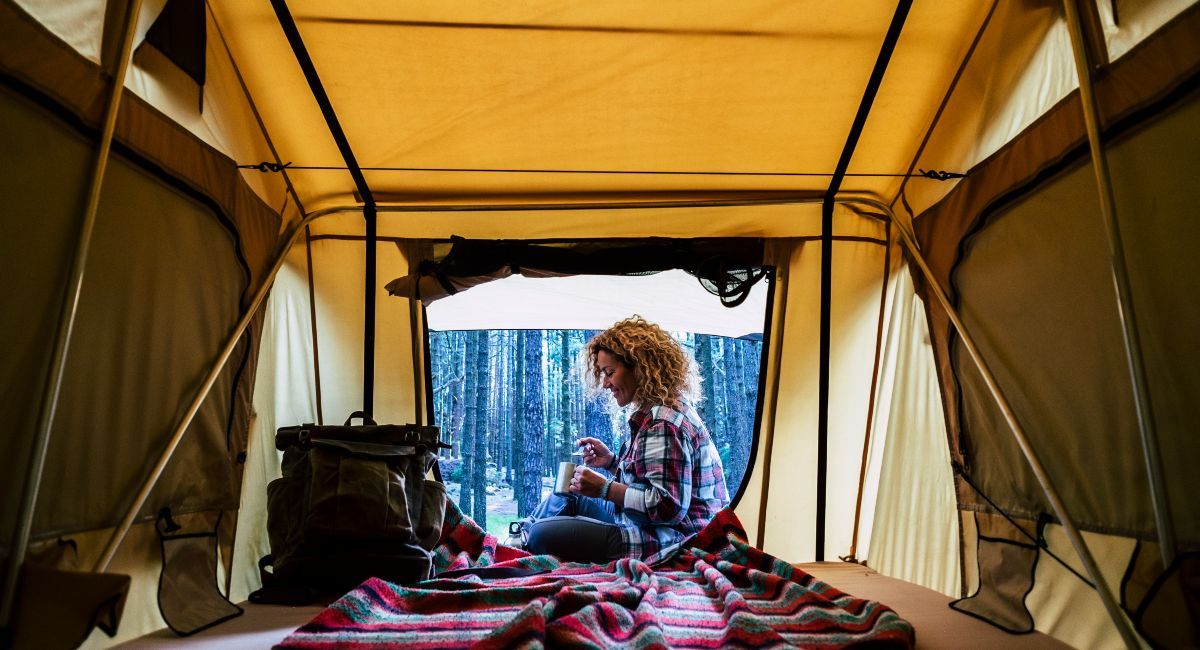
Camping in a truck camper means a bed over the truck cab, a compact kitchen with a two-burner stove and small fridge, and, in many hard-side models, a wet bath where the shower and toilet share one space. Tanks are small, so you'll conserve water. Pop-ups trade insulation for weight savings.
Tank sizes tell the story. Truck Camper Magazine lists the compact Lance 650 at 22 gallons of fresh water, 14 gallons of gray, and 16 gallons of black, while larger slide-out models carry roughly double. Pop-ups often skip the bathroom entirely. If a toilet and shower matter to you, our roundup of truck bed campers with bathrooms is a good place to start, and our list of the best truck bed campers compares popular models.
Power usually comes from a house battery, often with solar, plus propane for the stove, furnace, and, in many models, the fridge. That's what makes truck campers good for boondocking — you can camp a few days with no hookups.
Where can you take a truck bed camper?
A truck camper can go most places a pickup can: established campgrounds, gravel forest roads, and free dispersed campsites on public land. The Bureau of Land Management says dispersed camping is generally limited to 14 days within any 28-day period, and limits vary by area.
National forests allow dispersed camping too, but expect no services. The Coronado National Forest notes that "potable water, restrooms, trash bins, and other amenities are not available at dispersed sites." Check the specific forest's stay limit — they differ. Our guide to BLM camping areas can help you find a spot.
Across much of the Mountain West, public land starts close to town. You can pick one up in Denver, Moab, or Flagstaff and head for forest roads within an hour of pickup.
How does renting a truck camper work?
Truck camper rentals usually come one of two ways: the camper and truck together as one unit, or the camper alone for your own truck. If you bring your truck, the host will confirm your payload, bed length, and tie-downs before loading. Either way, expect a walkthrough of the jacks, tie-downs, and systems.
Hosts tell us the jacks and tie-down walkthrough is the part renters most often rush. Ask the host to show you how to raise and lower the camper, check the tie-down turnbuckles, and run the water, propane, and electrical systems. In our experience, one practice run at pickup — raising and lowering the jacks yourself while the host watches — saves a lot of stress at the first campsite. Our step-by-step RV setup guide for renters covers the basics.
Before you load up passengers, know that riding in the camper while driving is regulated differently by each state. California, for example, requires that passengers in a camper have access to an exit door that opens from the inside and outside, plus a signaling device to get the driver's attention unless passengers can reach the cab directly. Check the rules for every state on your route — and when in doubt, everyone rides in the cab.
Ready to hit the backroads? Browse truck camper rentals on Outdoorsy and find the rig that fits your trip — and your truck. Find what moves you.
About this blog
This blog was researched and written by the Outdoorsy editorial team. It draws on National Highway Traffic Safety Administration and federal vehicle labeling rules, Bureau of Land Management and U.S. Forest Service camping guidance, California Highway Patrol RV rules, manufacturer specifications and pricing from Four Wheel Campers and Lance, Go RVing, Truck Camper Magazine's buyer's guide, and patterns from RV owner forums and conversations with Outdoorsy hosts and renters. Prices and specs change; confirm with the manufacturer or your host. We have no commercial relationship with the brands mentioned unless explicitly noted.