
A New England fall road trip by RV puts you in the middle of the color — covered bridges, maple-lined back roads, and mountain notches glowing red and gold. But fall in New England is short, and RVers face two extra challenges: some famous scenic roads don't allow big rigs, and many campgrounds close by mid-October. This guide gives you a seven-day loop through Vermont, New Hampshire, and Maine, plus the roads, campgrounds, and cold-weather tips that make it work in an RV.
The Bottom Line
- Peak color moves south and downhill: northern and high areas peak in late September, the White Mountains in early October, and southern and coastal areas in the second half of October.
- Book early and confirm closing dates: many Vermont state parks close after Indigenous Peoples' Day / Columbus Day.
- Know your roads: the Mt. Washington Auto Road bans RVs, and Smugglers' Notch is illegal for single-frame rigs over 40 feet.
- The Kancamagus Highway is a 34-mile scenic byway most RVs can handle.
- Pack for cold nights: October nights in the mountains get chilly, so plan on running the furnace.
When is peak fall foliage in New England?
Peak foliage in New England starts in late September in northern Vermont and New Hampshire's Great North Woods, reaches the White Mountains in the first two weeks of October, and arrives in southern and coastal areas during the second half of October. Color starts on mountaintops and moves down into the valleys.
Vermont's tourism department says that in the last week of September and first week of October, "foliage is popping", and that color "generally starts at higher elevations." New Hampshire's foliage tracker says "The White Mountains generally reach peak color during the first two weeks of October," while southern and coastal regions peak in the second half of the month. Maine publishes a weekly official foliage report during the season.
RVers we talk to who do New England every fall say the trick is following the color downhill: start high and north, then drift south and toward the coast as the season moves.
What's the best 7-day New England fall route by RV?
The best seven-day route is a loop from Boston through Vermont's Green Mountains, across New Hampshire's White Mountains, and out to the Maine coast. It hits Route 100, Stowe, the Kancamagus Highway, and Acadia, with short driving days that suit an RV.
Days 1–2: Boston to southern Vermont
Pick up your rig with RV rentals in Boston and head northwest to Vermont Route 100, which runs north–south through the Green Mountains. Take it slow through the villages and stop at covered bridges — but check posted clearances before you pull a tall rig under one.
Days 3–4: Stowe and the Northeast Kingdom
Base yourself near Stowe — or start here with RV rentals in Stowe. Skip Smugglers' Notch in a big rig (more below) and explore the quieter roads of the Northeast Kingdom. In our experience, a 25-foot Class C is the sweet spot for Vermont back roads.
Days 5–6: White Mountains
Drive the Kancamagus Highway between Lincoln and Conway, then base in North Conway. Renters can also start here with White Mountain National Forest RV rentals.
Day 7: Maine coast or Acadia
Head east to the Maine coast or continue to Acadia National Park. For more on the park, browse Acadia National Park RV rentals. Want a shorter version? Our five-day New England RV trip trims the route.
RV-Friendly Scenic Roads in New England
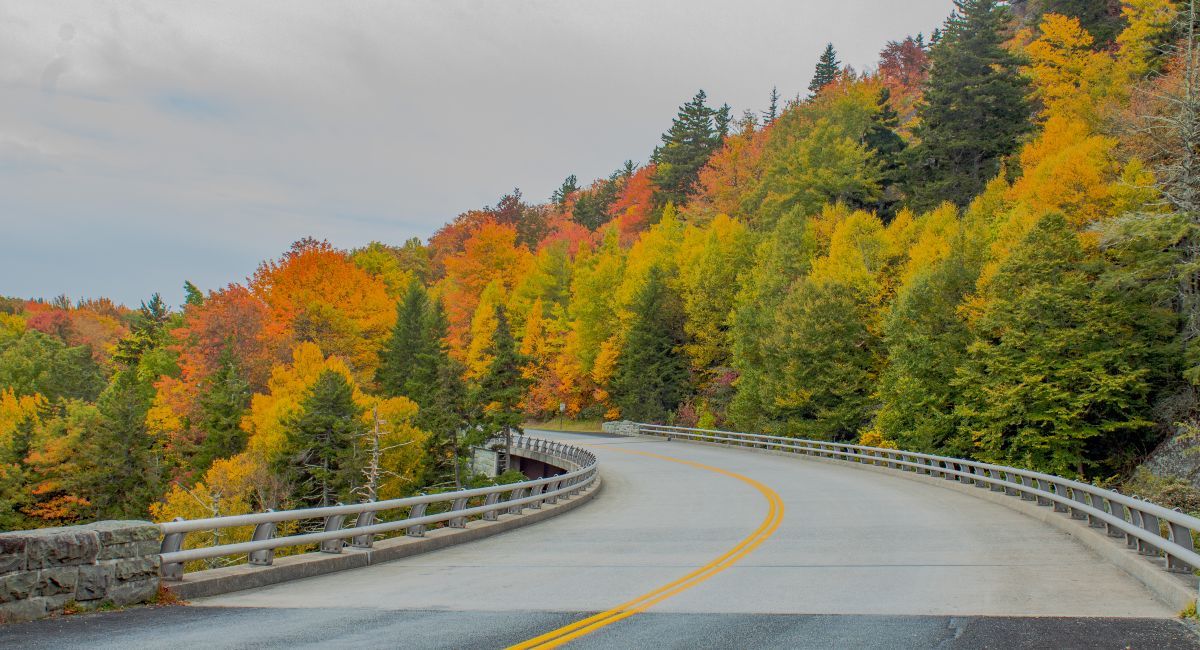
The Kancamagus Highway and Vermont Route 100 work for most RVs if you drive carefully. Smugglers' Notch on Vermont Route 108 is illegal for single vehicles over 40 feet and a bad idea for most big rigs. The Mt. Washington Auto Road bans RVs entirely, and Acadia's Cadillac Summit Road prohibits RVs and trailers.
Kancamagus Highway (NH 112), New Hampshire: This 34-mile scenic byway winds through the White Mountains and is suitable for RVs with some caution. Drivers should be prepared for winding roads, elevation changes, and limited services along the route.
Vermont Route 100: This scenic two-lane highway passes through charming Vermont villages and is generally RV-friendly with careful driving. Pay particular attention to road widths and clearance restrictions around covered bridges.
Smugglers' Notch (VT 108), Vermont: This narrow, winding mountain road is not suitable for large RVs. Vehicles over 40 feet in length are prohibited, and the steep curves and tight passages make navigating difficult for larger rigs. The road also closes during winter.
Mt. Washington Auto Road, New Hampshire: RVs, motorhomes, and trailers are not permitted on the Mt. Washington Auto Road. Travelers exploring the area by RV should arrange alternative transportation to reach the summit.
Cadillac Summit Road, Acadia National Park, Maine: RVs, trailers, and vehicles longer than 21 feet are prohibited on Cadillac Summit Road. RV travelers should use a smaller vehicle or alternative transportation to visit the summit and enjoy its panoramic views.
Vermont law bars "Single-frame motor vehicles over 40 feet in length" from the Smugglers' Notch section of Route 108, with a $10,000 civil penalty — or $20,000 if you block traffic. Vermont State Parks adds that Route 108 north of the campground is narrow and the road closes in winter.
The Mt. Washington Auto Road vehicle rules are blunt: "No trailers, RV's, or motorhomes." The White Mountain National Forest describes the Kancamagus as a 34-mile scenic byway that connects with the White Mountain Trail to make a loop. At Acadia, the NPS says RVs and trailers are prohibited on Cadillac Summit Road, and other vehicles need a $6 reservation through October 25, 2026.
Where can you camp with an RV in New England in October?
In October, RVers camp at state parks, White Mountain National Forest campgrounds, Acadia's NPS campgrounds, and private RV parks near hubs like Stowe, North Conway, and Bar Harbor. Many public campgrounds lack hookups, so private parks are the best bet for electric and water — and they often stay open later in the season.
- Vermont State Parks: campgrounds have no electric, water, or sewer hookups, though many have dump stations. Reservations now open on a rolling 11-month window.
- White Mountain National Forest: Jigger Johnson Campground, twelve miles west of Conway on the Kancamagus, is first-come, first-served with coin-operated showers. Watch out for Covered Bridge Campground: its namesake bridge has a 7-foot-9-inch height limit, so larger RVs must use the back entrance via Passaconaway Road.
- Acadia: Schoodic Woods Campground offers RV sites with electric (20/30/50 amp) or electric and water, and Acadia's campgrounds require reservations in advance. Schoodic Woods' 2026 season ended October 12, so plan it for late September or early October.
- Private parks: browse RV parks and campgrounds in Maine and look for parks near Stowe and North Conway that stay open into late October.
When do New England campgrounds close for the season?
Many New England public campgrounds close in mid-October. Most Vermont state parks close by Labor Day or the second Monday in October (Indigenous Peoples' Day / Columbus Day), many White Mountain National Forest campgrounds close mid-October, and Maine's Camden Hills closes October 15. New Hampshire state parks run a little later, with many open until late October.
- Vermont: "Most Vermont State Parks are open from Memorial Day to Labor Day or until the second Monday in October."
- New Hampshire: the 2026 state park campground schedule lists October 24 as the last reservable date at many parks, including Lafayette in Franconia Notch, and October 11 at several Great North Woods parks.
- White Mountain National Forest: Jigger Johnson and Covered Bridge campgrounds run mid-May to mid-October.
- Maine: at Camden Hills State Park, the off-season camping page says "Campground closes at noon on October 15."
- Acadia: the NPS lists Blackwoods' 2026 season as May 1 to October 19, and Seawall and Schoodic Woods as May 20 to October 12, so all three are closed for 2026 as of October 20, 2026.
We've watched renters plan around Indigenous Peoples' Day / Columbus Day weekend and find the campground closed for the season. If you're reading this in late October, most public campgrounds are done for 2026 — plan next fall's trip and book the moment reservations open.
How do you stay warm in an RV on a New England October night?
Fill the propane tanks, test the furnace before your first cold night, and pack warm bedding. On nights that dip near freezing, disconnect and store the water hose, and keep a little heat running so the plumbing doesn't freeze. Crack a vent for fresh air, and make sure the carbon monoxide and propane detectors work.
A few more tips:
- Ask your host how the furnace and tank heaters work, and whether the rental is winterized for any part of the trip.
- Use your freshwater tank instead of a hose connection on cold nights.
- Layer up for early mornings — the best light on the foliage often comes before the air warms.
Hosts tell us renters who test the furnace at pickup have far fewer late-night calls. For more color routes beyond New England, see our best drives to get your fall foliage fix.
Ready to chase the color? Browse RV rentals near you and start planning next fall's foliage loop. Find what moves you.
About this guide
This guide was researched and written by the Outdoorsy editorial team. Our information draws on official foliage reports from Vermont, New Hampshire, and Maine, Vermont statutes and state park pages, New Hampshire State Parks schedules, White Mountain National Forest campground pages, National Park Service information for Acadia, the Mt. Washington Auto Road's vehicle rules, and conversations with Outdoorsy hosts and renters. We have no commercial relationship with the businesses mentioned unless explicitly noted.