
TL;DR
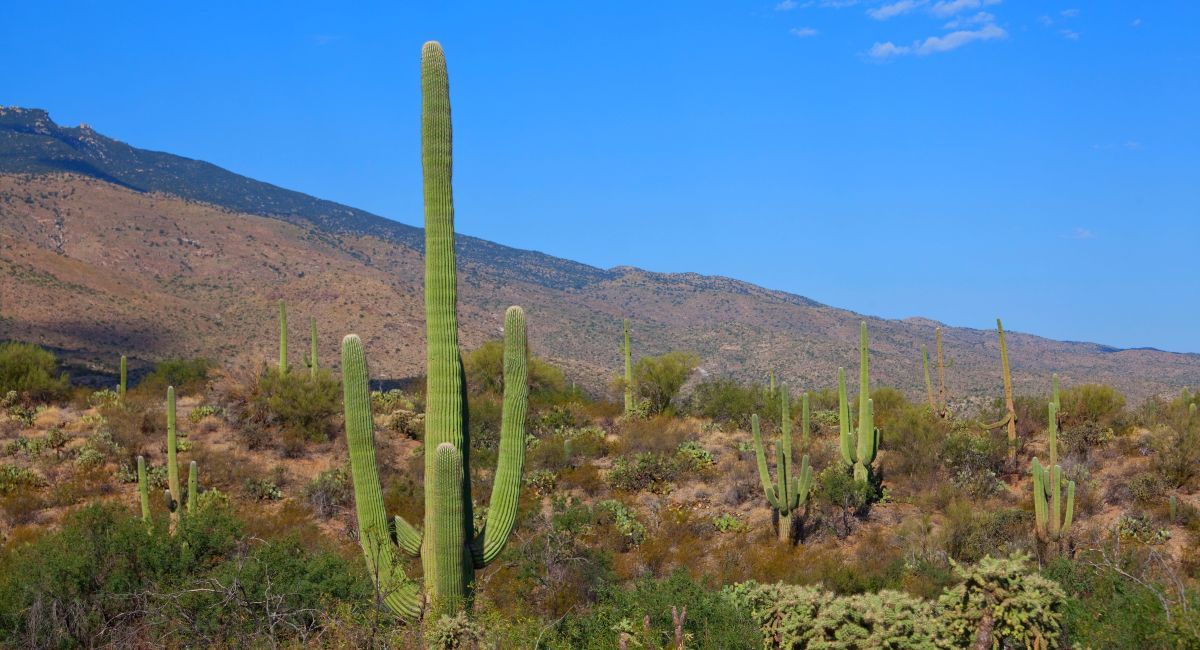
Saguaro has no RV or vehicle camping inside the park — all overnight stays are backcountry, hike-in only. The RV play is base-camping in Tucson (15–30 minutes from both districts) and day-tripping in. Two districts: East (Rincon Mountain, 67,000 acres, 8-mile paved Cactus Forest Drive) and West (Tucson Mountain, 24,500 acres, 6-mile Bajada Loop dirt road, denser saguaro forests). Both districts cap vehicles at 40 feet combined length and 8.5 feet wide. The East District's scenic drive lacks RV parking. Gilbert Ray Campground (138 sites, electric hookups) sits adjacent to the West District entrance — open September through April. Entry: $25/vehicle (credit/debit only, no cash), valid 7 days, both districts. Best season: October–April.
Why is Saguaro a base-camp park for RV travelers?
Most renters who book a Tucson RV trip don't realize Saguaro has no vehicle camping until they start planning routes. The reaction is always the same: disappointment, then relief.
Saguaro National Park has zero developed campgrounds. No pull-throughs, no hookup pedestals, no dump station. The only overnight option inside the park is backcountry tent camping at six designated sites, each requiring a 5–10 mile hike and a permit ($8 per night through Recreation.gov). If you're in an RV, the park is a day-use destination.
That's not a problem — it's the setup for a better trip. Tucson is a city of over a million people with dozens of RV parks and campgrounds within 15–30 minutes of both Saguaro districts. You get full hookups, a hot shower, groceries, and restaurants within walking distance — then you're standing among 200-year-old saguaros by 8 AM. The base-camp model means you never compromise on comfort or access.
The two districts sit on opposite sides of Tucson, separated by about 30 miles of city. Your entry fee — $25 per vehicle, credit or debit only (no cash accepted) — covers both districts for seven days. That gives you time to visit each one without rushing.
What's the difference between Saguaro East and West for RVs?
The two districts aren't interchangeable. They have different landscapes, different drives, and different vehicle constraints — and NPS getting-around guidance makes the RV limitations clear.
East: Rincon Mountain District (66,947 acres)
The larger district. Cactus Forest Drive is an 8-mile paved one-way loop with scenic vistas, trailheads, and interpretive pullouts — but the NPS says plainly that it "lacks parking for RVs and larger vehicles." The road is narrow with tight turns and steep sections. If you're in anything over 25 feet, leave the rig at camp and take a tow vehicle.
The East District has 128 miles of hiking trails, including the backcountry campsites at elevations up to 8,666 feet (Mica Mountain). The saguaros here tend to be older, and the vegetation shifts from desert floor to pine forest as you gain elevation. The visitor center parking lot can accommodate some larger vehicles for a quick stop, but don't plan to drive the full loop in your RV.
West: Tucson Mountain District (24,498 acres)
The smaller district, but the one with the densest saguaro forests — this is where you get the iconic photos. Bajada Loop Drive is a 6-mile graded dirt road that starts 1.5 miles west of the Red Hills Visitor Center. It's manageable for most vehicles (no high clearance required), but the unpaved surface and pullout sizes favor shorter rigs.
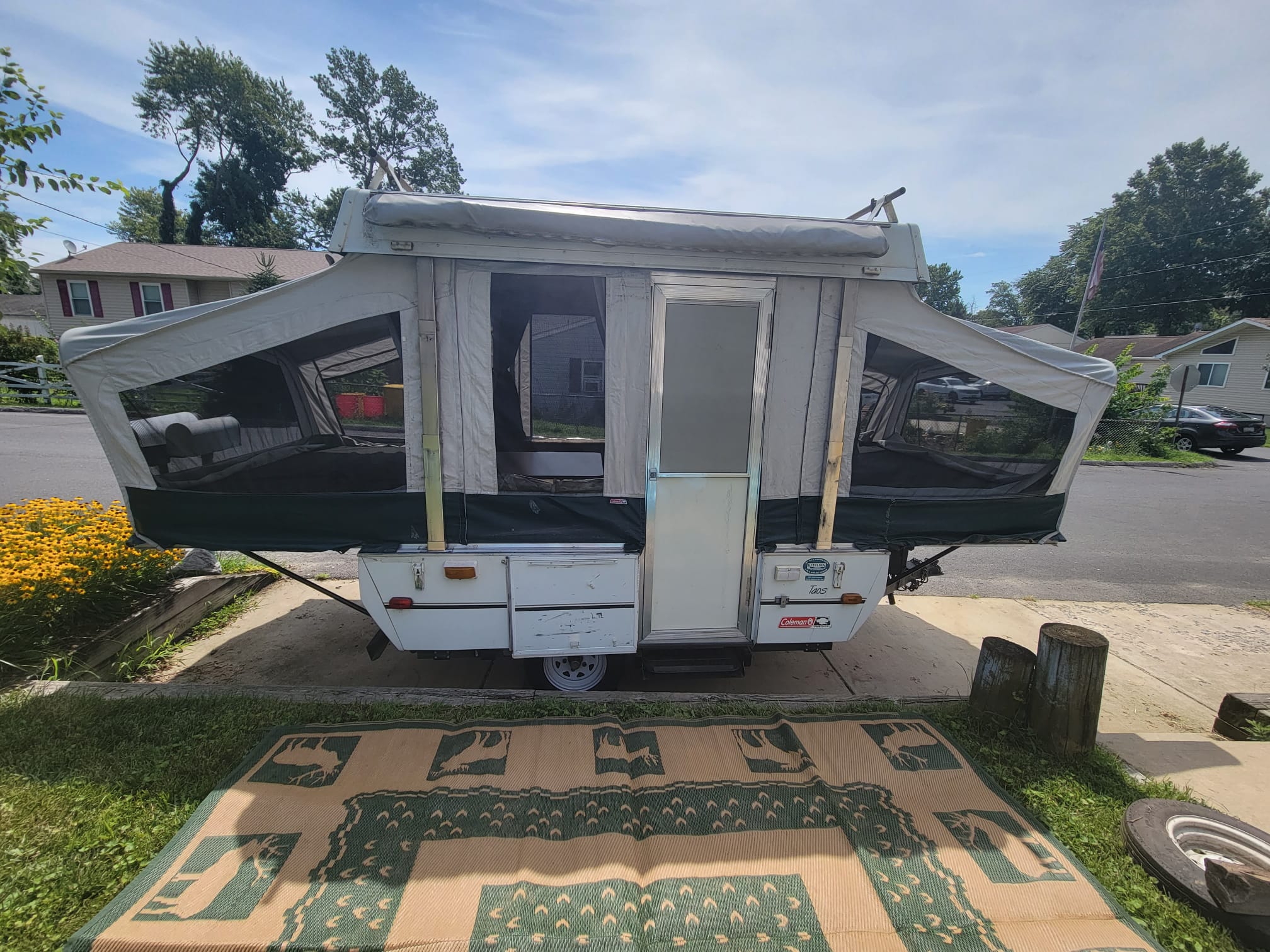
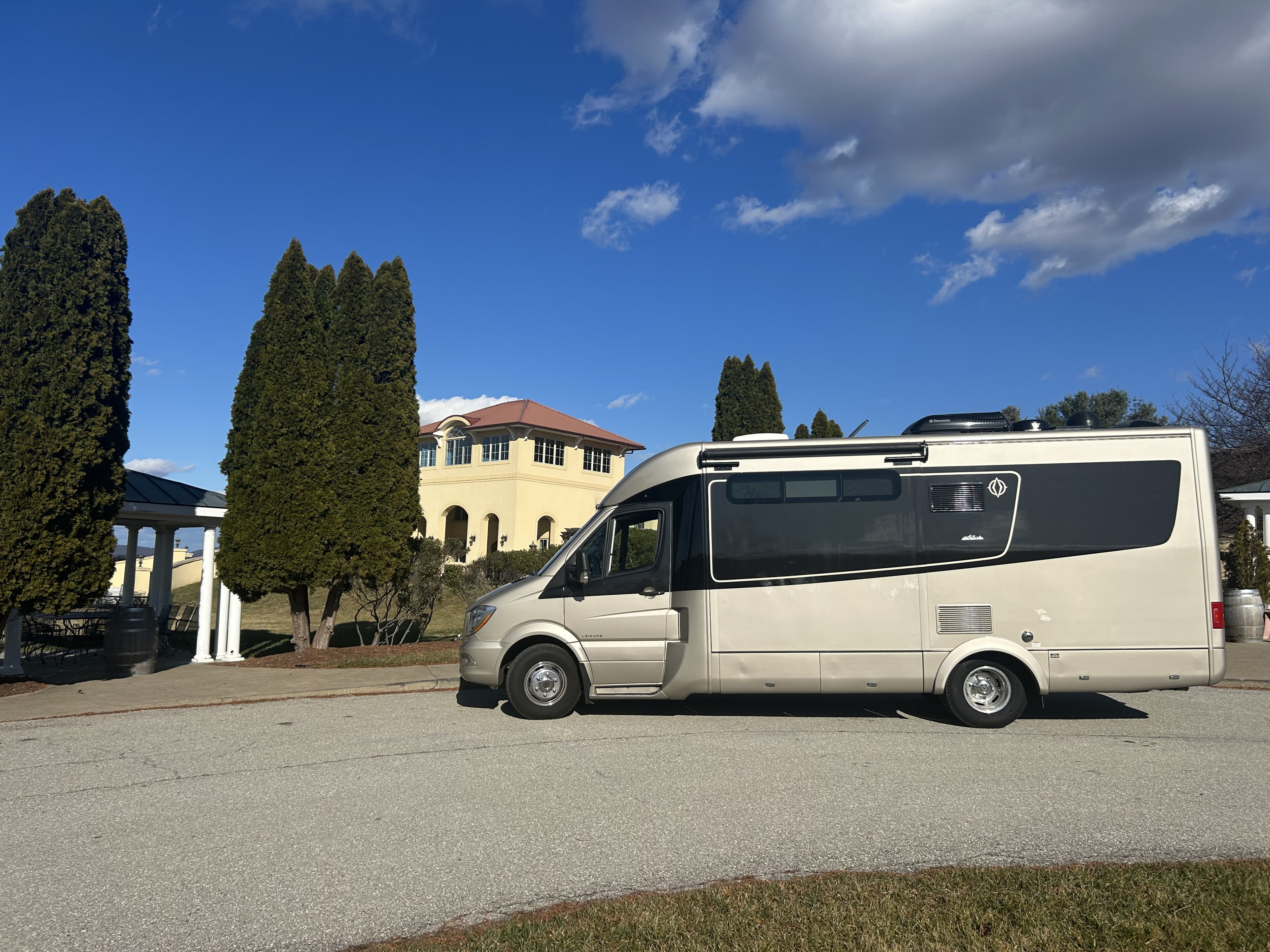
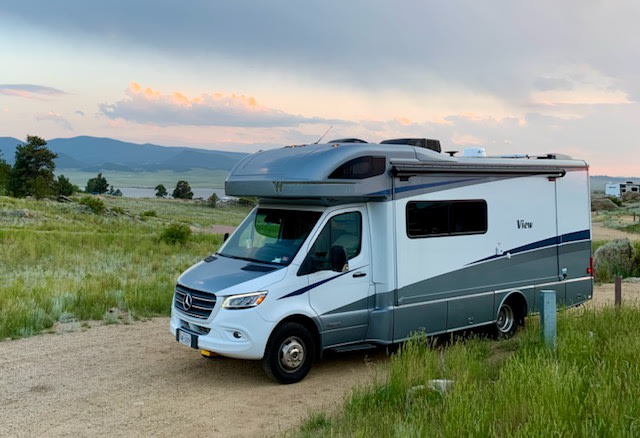
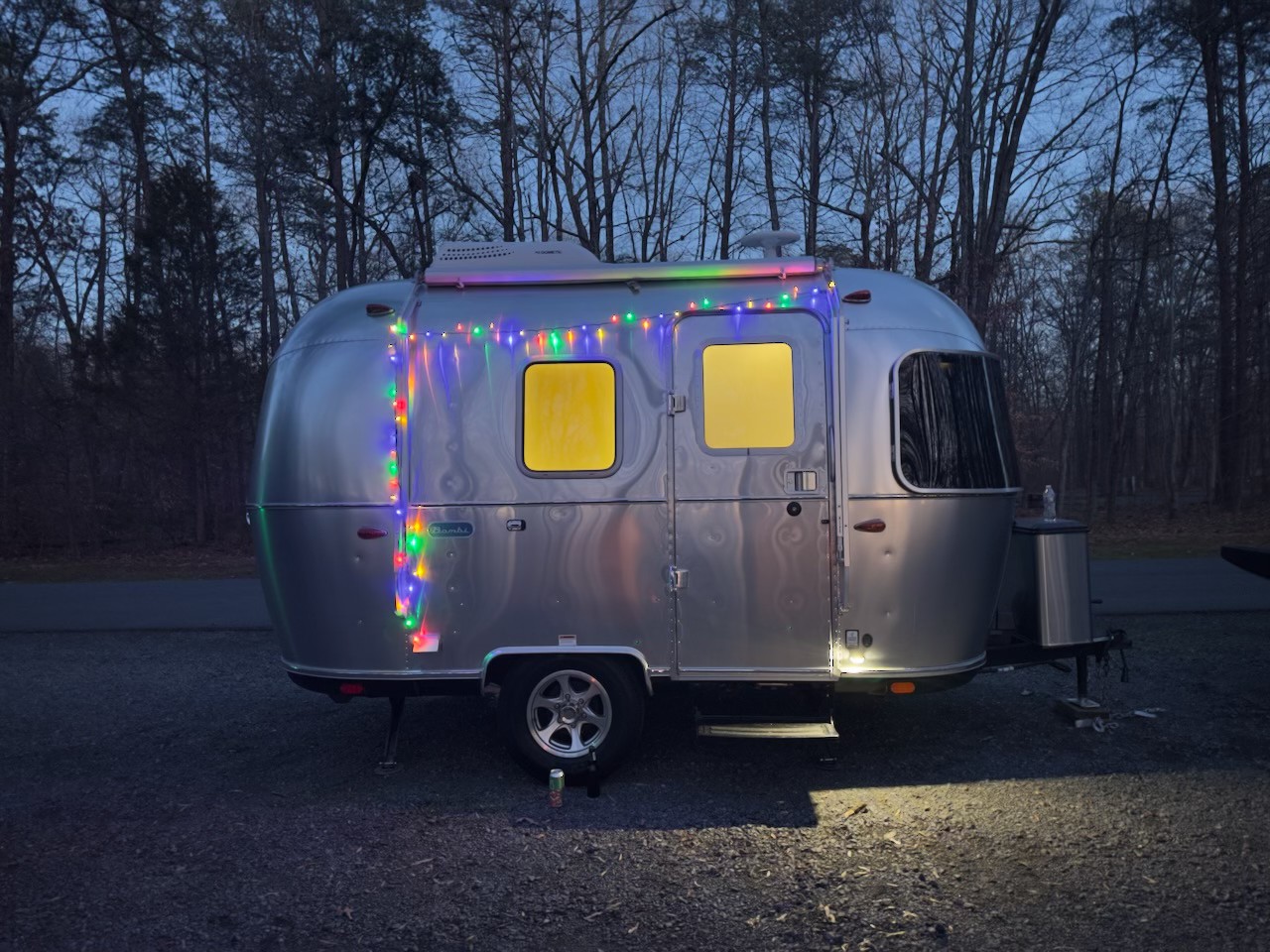
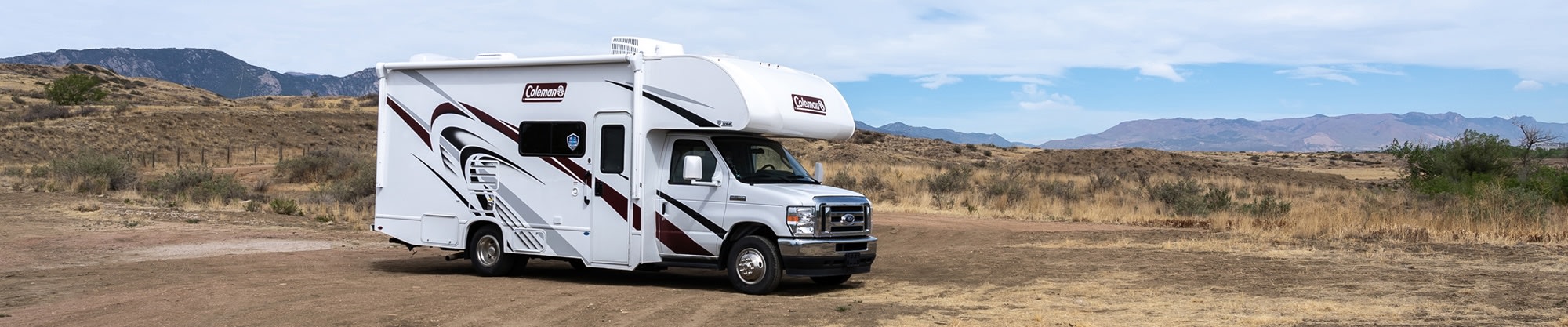
Both districts enforce the same vehicle limits: maximum 40 feet combined length (including anything you're towing) and 8.5 feet wide. In a Class B campervan, you can drive both loops without thinking about it. In a 35-foot Class C with a tow car, you're over the limit.
Where should you park your RV near Saguaro?
Your campground choice depends on which district you want closest.
Gilbert Ray Campground (Pima County) — West District adjacent
The closest public campground to either Saguaro district, and the top pick for most RV trips. Gilbert Ray sits inside Tucson Mountain Park, essentially bordering the West District entrance. You're surrounded by saguaros at camp, not just in the park.
- Sites: 138 across four loops (tent, electric RV, group)
- Hookups: Electric only (20, 30, and 50 AMP options)
- Max RV length: 40 feet including tow
- Season: September 1 through April 30 — closed May–August
- Reservations: Required, via DiscoverNature.pima.gov
- Contact: 520-724-5159
Gilbert Ray fills up fast in January and February — Tucson's snowbird season puts every public campground at capacity. If you're visiting in peak winter, book the day reservations open or default to one of Tucson's private resorts.
Coronado National Forest campgrounds — East District side
Three developed campgrounds sit in the Santa Catalina Mountains northeast of Tucson, roughly 30–45 minutes from the East District:
- Gordon Hirabayashi (former Prison Camp): Low elevation, year-round
- Molino Basin: Desert scrub setting, seasonal
- Rose Canyon: High-elevation pine forest (7,000+ feet), seasonal
All run about $20 per night with vault or flush toilets, picnic tables, and fire rings — but no hookups, no dump stations, and no showers. Good for a night or two if you're comfortable dry camping.
Tucson full-service RV resorts
If you want full hookups, pool access, and urban convenience, Tucson has a deep bench of private RV parks between the two districts:
- Rincon Country East/West: 15 minutes from East District, full hookups, pools, dog parks, 380+ sites at the West location
- Mission View RV Resort: Full hookups, pool, 160 sites, 20 miles from the park
- Far Horizons RV Resort: Intimate (40 sites), full hookups, pool, hot tub
- Prince of Tucson RV Park: Full hookups, pool, 175+ sites
Most of these resorts cater to snowbirds and have monthly rates for extended stays. Nightly rates range from $40–70 depending on season. Check our Tucson RV parks guide for the full rundown.
What can you see and do at Saguaro from an RV base camp?
Scenic drives
Bajada Loop Drive (West): Six miles of graded dirt through the densest saguaro forest in the park. Multiple pullouts for photos. Signal Hill Petroglyphs trailhead sits along the loop — a short 0.5-mile walk to Hohokam rock art dating back 800 years. Best in a shorter vehicle or tow car, though shorter RVs can manage.
Cactus Forest Drive (East): Eight miles of paved one-way loop through rolling desert hills and mature saguaro stands. More developed than the West, with interpretive signs and multiple trailheads. Not recommended for RVs — park at the visitor center and drive a smaller vehicle.
Day hikes
- Valley View Overlook (West): 0.8 miles, easy. Panoramic view of Avra Valley and the saguaro forest below.
- Desert Discovery Nature Trail (West): 0.5 miles, easy. Interpretive signs identifying desert plants and animals.
- Signal Hill Petroglyphs (West): 0.5 miles, easy. Hohokam petroglyphs on a rocky hilltop.
- Freeman Homestead Nature Trail (East): 1 mile, easy. Historic homestead site with massive saguaros.
- Tanque Verde Ridge Trail (East): 15.4 miles out-and-back, strenuous. Climbs from desert floor to high-elevation grasslands.
Arizona-Sonora Desert Museum
In our trip reviews, renters consistently rate the Arizona-Sonora Desert Museum as the day's highlight — above the park itself. It's a zoo, botanical garden, and natural history museum in one, it's adjacent to the West District entrance, and the parking lot can handle RVs. The museum covers 98 acres with 230 animal species and 1,200 plant species native to the Sonoran Desert. Admission runs about $25 for adults. Plan your West District day around it.
Wildlife
Saguaro hosts over 200 bird species — this is one of the best birding parks in the NPS system. Gila woodpeckers and elf owls nest inside saguaro trunks. On the ground, expect javelinas (peccaries), roadrunners, desert tortoises, and the occasional Gila monster. Coyotes are common at dawn and dusk.
When is the best time to visit Saguaro in an RV?
Saguaro's season follows Tucson's desert calendar.
Winter (November–February): The best RV window. Daytime highs in the 60s–70s, cool nights. Gilbert Ray Campground is open and in peak demand (snowbird season). Book early. This is the most popular season at the park, but Saguaro never feels crowded the way Yosemite or Zion does.
Spring (March–April): Wildflower season. Saguaro blooms typically hit in May–June, but the desert floor flowers start earlier. Temperatures climb into the 80s. Crowds pick up.
Fall (September–October): Heat begins to break. Gilbert Ray reopens September 1. Temperatures drop from summer extremes back to the 80s–90s by October. Fewer visitors.
Summer (May–August): Highs regularly exceed 100°F, and the monsoon season (July–September) brings afternoon thunderstorms. Gilbert Ray is closed. Only visit if you handle heat well and have full-hookup shore power for air conditioning.
How do you plan an RV trip to both Saguaro districts?
A two-day plan works cleanly.
Day 1 — West District + Arizona-Sonora Desert Museum. Start at the Red Hills Visitor Center for maps and ranger intel. Drive Bajada Loop (6 miles, unpaved — in your tow vehicle if your rig is over 25 feet). Hike Signal Hill Petroglyphs and Valley View Overlook. Afternoon: Arizona-Sonora Desert Museum (plan 2–3 hours). Return to Gilbert Ray or your Tucson RV park.
Day 2 — East District. Drive to the Rincon Mountain District Visitor Center (30 miles across Tucson). Park and drive Cactus Forest Drive in a smaller vehicle. Hike Freeman Homestead or one of the short desert loops. The East District is larger and wilder — if you only have a half day, prioritize the scenic drive and one trailhead.
The $25 entry fee covers both districts for seven days, so you can spread visits across your stay. Tucson itself has enough food, culture, and desert scenery to fill the days between park visits — and Phoenix is 90 minutes north if you want to extend the trip. For a sense of what a week-long RV rental costs, we break it down by vehicle type.
About this guide
Camping and vehicle restriction details from NPS Saguaro camping and NPS getting around. Entry fees from NPS Saguaro fees. Gilbert Ray Campground details from Pima County Parks. Wilderness permit information from Recreation.gov. RV park and campground recommendations based on Outdoorsy's rental support data and renter trip reviews across multiple Tucson-area seasons. Fees and operational details confirmed for the 2026 season.