

For RV enthusiasts looking for trailers that are easy to tow, lightweight travel trailers under 3,000 pounds are the perfect option. These trailers are ideal for small SUVs or cars with limited towing capacities, and they offer great features for both weekend getaways and long road trips.
Most travel trailer listicles give you a name and a photo. What they don't give you is the answer to the question that actually matters: can your vehicle tow it? That's the gap we're filling here. Every trailer below is paired with the tow vehicles it actually works with — not the theoretical maximum, but the real-world match with margin to spare.
Lightweight Travel Trailers For Rent Near You
Let's break it down by weight class: trailers under 2,000 pounds dry, and trailers in the 2,000-to-3,000-pound range. And because this is the single most important detail that lightweight-trailer shopping pages skip — we'll talk about why the number on the spec sheet is never the number on the scale.
Quick read:
- Under 2,000 lbs dry: Happier Camper HC1 (~1,100 lbs), Scamp 13' Deluxe (~1,300–1,600 lbs) — towable by crossovers and some sedans with a hitch.
- 2,000–3,000 lbs dry: nuCamp TAB 320 (~2,050 lbs), Casita Spirit Deluxe (~2,480 lbs), Airstream Basecamp 16 (~2,650 lbs), nuCamp TAB 400 (~2,920 lbs) — for full-size SUVs and trucks.
- The catch everyone misses: Dry weight is the trailer with nothing in it. Add water (8 lbs per gallon), propane, clothes, food, and gear and you're looking at 500–800 lbs on top of the spec sheet number. Your tow vehicle needs to handle the loaded weight, not the brochure weight.
Browse trailer rentals on Outdoorsy to try before you buy — most of the models below are listed by owners near you.
Why pick a lightweight trailer?
A lightweight travel trailer changes the math on what kind of trip you can take and what you drive to get there. You don't need a heavy-duty truck. You don't need a CDL. In many cases, you don't even need a different vehicle — just a hitch and a brake controller.
The practical reasons stack up. A sub-3,000-pound trailer costs less in fuel (typically 2–4 mpg less than your unladen consumption, depending on terrain and wind). It fits in standard parking spots. It doesn't need a truck-stop-wide turning radius. And for RVers we talk to who are testing the waters — renting a lightweight trailer on Outdoorsy before committing to ownership — the learning curve is gentler. Backing up a 16-foot trailer is a different animal than backing up a 35-foot fifth-wheel.
The trade-off is space. Most trailers under 3,000 pounds sleep two to four, and the kitchen and bathroom (if there is one) are built for efficiency, not comfort. That's the honest answer: you're trading square footage for flexibility.
Overview of the best lightweight trailers on this list
| Model | Dry Weight | Length (ft) | Price (Approx) | Best Vehicles to Tow | Key Features |
|---|---|---|---|---|---|
| Happier Camper HC1 | 1,000–1,100 | 13 | $34,000+ | Subaru Outback, RAV4 Hybrid, Honda CR-V | Ultra-light modular interior, compact footprint, adaptable furniture system |
| Scamp 13' Deluxe | 1,300–1,600 | 13 | $24,000+ | Toyota Highlander, Honda Pilot, Toyota 4Runner | Fiberglass shell, wet bath, strong resale value, lightweight bathroom-equipped trailer |
| nuCamp TAB 320 | ~2,050 | 13.7 | $32,000+ | Toyota Tacoma, Highlander, 4Runner | Teardrop design, rear galley hatch, optional Boondock off-grid package |
| Casita Spirit Deluxe | ~2,480 | 17 | $32,000+ | 4Runner, Honda Pilot, Chevy Colorado | Fiberglass construction, full wet bath, durable shell with no delamination risk |
| Airstream Basecamp 16 | ~2,650 | 16.3 | $55,900+ | Half-ton trucks, Tahoe, Toyota 4Runner | Iconic aluminum build, rear hatch storage, optional off-road package |
| nuCamp TAB 400 | ~2,920–2,950 | 15.6 | $45,000+ | Ford F-150, Toyota Sequoia, Expedition | Largest TAB model, full wet bath, indoor kitchen, sleeps up to three |
Travel trailers under 2,000 pounds (dry weight)
These are the trailers you can tow with a crossover, a minivan, or a midsize SUV — sometimes even a four-cylinder vehicle with the right hitch setup. The common thread: fiberglass or composite construction, compact footprint, and a loyal following that borders on obsessive.
Happier Camper HC1
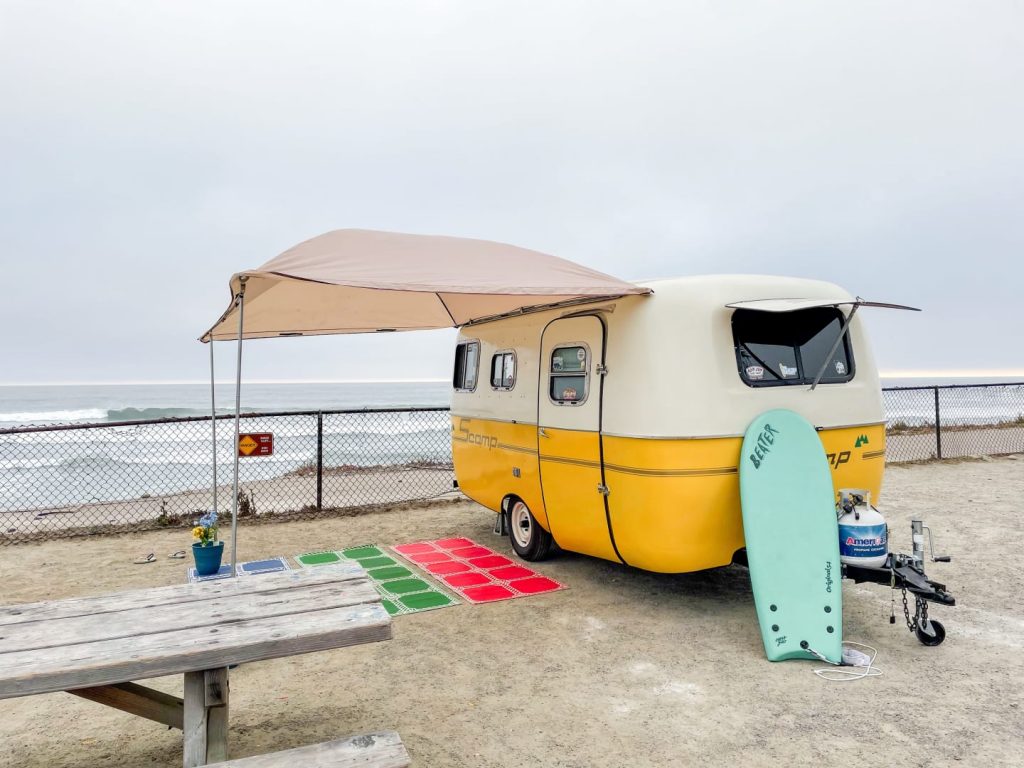
The Happier Camper HC1 is one of the lightest hard-shell travel trailers on the market. The Breeze trim starts at roughly 1,000 lbs dry; the Classic and Essentials trims come in around 1,100 lbs. Loaded and road-ready, expect about 1,500 lbs — which puts it within range of vehicles you wouldn't normally associate with towing.
What makes it unusual is the modular interior. The inside uses Adaptiv furniture cubes that rearrange into different configurations — dinette, bed, desk, open floor. It sleeps two comfortably, and the 13-foot exterior length parks like a large sedan.
What can tow it: At 1,500 lbs loaded, even a RAV4 Hybrid (1,750-lb tow rating) or a Subaru Outback (2,700 lbs with the turbocharged engine) can handle this with margin. A Honda CR-V, Mazda CX-5, or similar crossover with a tow package should be fine. Check your specific model's rating — the number varies by trim and drivetrain.
The practitioner note: The HC1 doesn't have a built-in bathroom in the standard configuration, and the water and power systems are minimal. This is a sleeping-and-eating trailer, not a self-contained one. For weekend trips and campground-based travel, that's generally not an issue. For boondocking, you'll want external solutions.
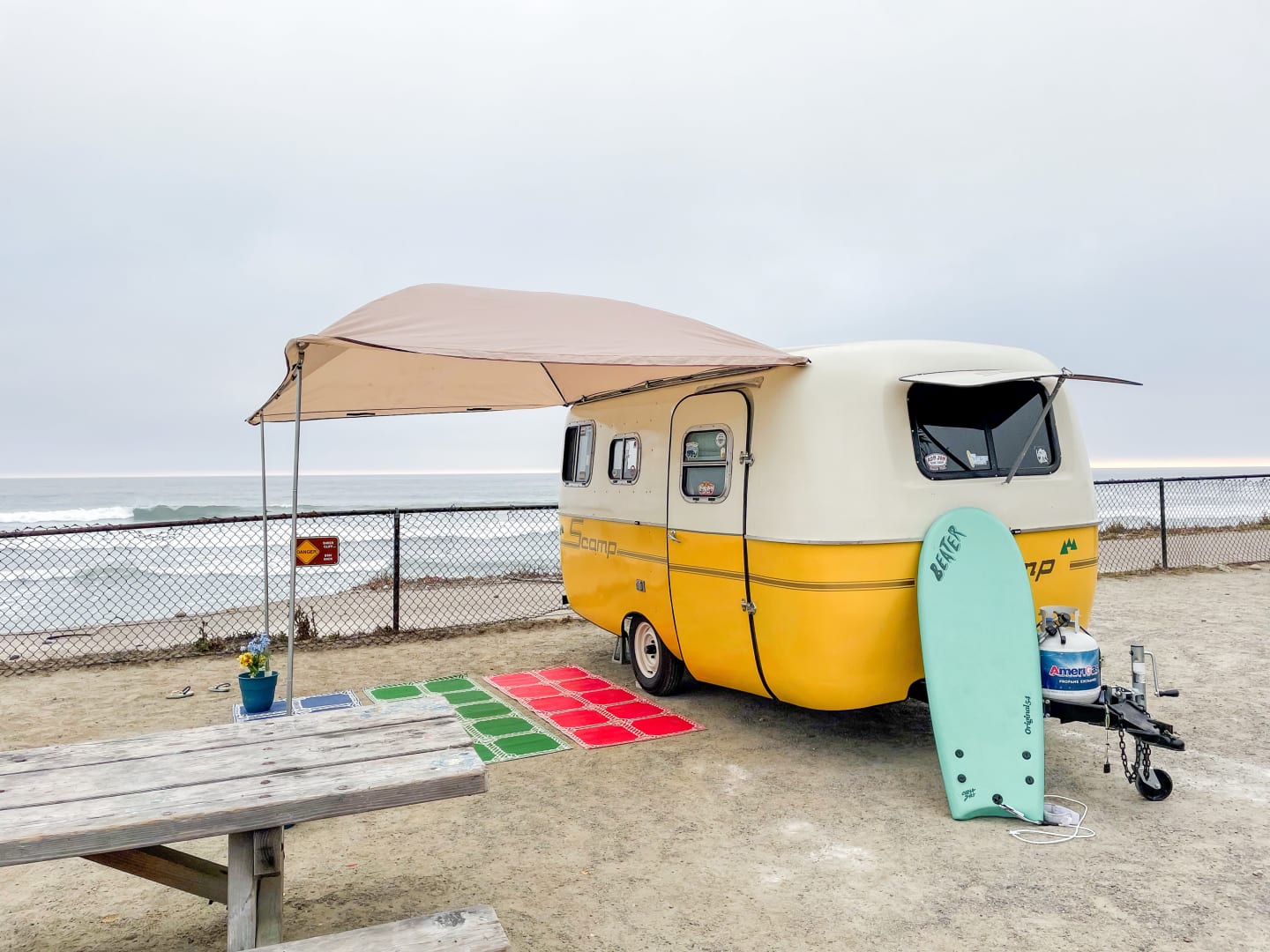
Scamp 13' Deluxe
The Scamp 13' Deluxe is a fiberglass egg that's been in production since 1972 — and the waitlist reflects it. Dry weight runs 1,300 to 1,600 lbs depending on options and layout. The Deluxe adds a wet bath (toilet and shower combo) and a small galley kitchen, which makes it one of the lightest trailers with a real bathroom.
Built in Backus, Minnesota, Scamps are made to order. Lead times typically run several months, and the resale market is strong enough that used Scamps sometimes sell for close to their original price. Renting one on Outdoorsy is often the faster path to finding out if the Scamp lifestyle fits.
What can tow it: At 1,600 lbs dry and roughly 2,100–2,300 lbs loaded (20-gallon water tank at 160 lbs, plus gear), a Toyota Highlander (5,000-lb rating), Honda Pilot (5,000 lbs), or Toyota 4Runner (6,000 lbs) handles this easily. A RAV4 Prime PHEV (2,500-lb rating) could manage it in theory, but you'd be running close to the limit once the tank is full and the cooler is packed — we'd generally recommend more margin than that.
Travel trailers 2,000–3,000 pounds (dry weight)
This is the sweet spot for full-size SUVs and midsize trucks. The trailers in this range typically have a real bathroom, a more functional kitchen, and enough sleeping space for a small family or a couple who likes legroom. The tow vehicle requirements step up — you're generally looking at something with a 5,000-lb-or-better tow rating.
nuCamp TAB 320
The nuCamp TAB 320 is a teardrop-style trailer with a cult following similar to the Scamp's. Dry weight starts around 2,050 lbs for the standard model; the Boondock package adds solar, a lithium battery, and off-grid capability for about the same weight. Overall length is 13'7".
The TAB 320 sleeps two in a rear queen bed, with a galley kitchen that opens from the back hatch — the classic teardrop cooking-outside setup. The S model adds an indoor kitchenette with a two-burner stove and a wet bath, which pushes the weight up slightly but keeps you under 2,200 lbs dry.
What can tow it: A Highlander, 4Runner, Pilot, or any truck handles this without thinking about it. The GVWR is typically around 2,800 lbs, which means even a V6 midsize truck like a Tacoma (6,400-lb tow rating) has massive headroom.
Why we'd recommend it: nuCamp builds in Sugarcreek, Ohio, and the fit-and-finish is a step above most trailers at this price. RVers we talk to who've owned both a TAB 320 and a comparably priced conventional trailer generally call out the build quality difference. The Boondock package makes it one of the few sub-2,500-lb trailers that can realistically dry-camp for several days.
Casita Spirit Deluxe
The Casita Spirit Deluxe is a 17-foot fiberglass trailer built in Rice, Texas. Dry weight is approximately 2,480 lbs, with a GVWR of 3,500 lbs. It has a full wet bath, a two-burner propane stove, a microwave, a 3-way refrigerator, and sleeping for two to three.
Like Scamp, Casita builds to order and the wait can be long. Like Scamp, the resale market is strong. The fiberglass shell means no delamination risk — a common problem with composite-sided trailers that Casita owners like to point out, and they're not wrong.
What can tow it: At 3,500 lbs GVWR, you want a tow vehicle rated for at least 4,500 lbs to maintain a comfortable margin. A 4Runner (6,000 lbs), Highlander (5,000 lbs), Honda Pilot (5,000 lbs), or any half-ton truck handles it. A V6 Tacoma or Chevy Colorado works too.
Airstream Basecamp 16
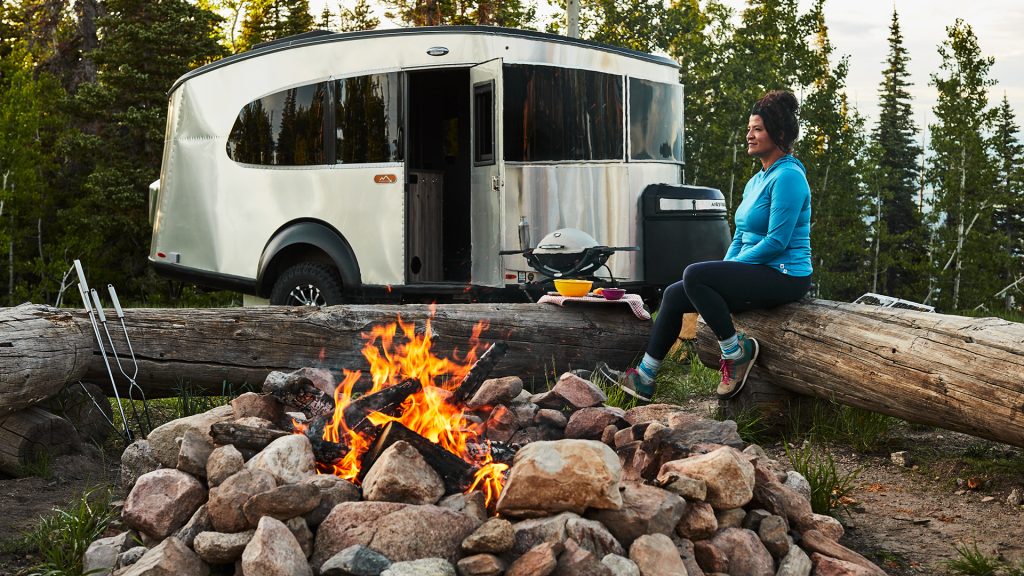
The Airstream Basecamp 16 is the entry point into the Airstream aluminum ecosystem. Dry weight is 2,650 lbs; GVWR is 3,500 lbs; hitch weight is 410 lbs. At 16'3" bumper to bumper, it's compact enough for backcountry access roads that longer Airstreams can't reach.
The floor plan is built for two — rear convertible bed, a wet bath with a cassette toilet, a two-burner cooktop, and enough storage for a week-long trip if you pack smart. The 16X variant adds an off-road suspension, a roof rack, and black tank flush for about 50 lbs more.
This is also the most expensive trailer on this list. New Basecamp 16s start around $55,900. Renting one on Outdoorsy before committing is worth considering — you'll find out whether the Airstream build quality and that rear hatch layout work for your trip style without the five-figure commitment.
What can tow it: Same vehicle class as the Casita — any SUV or truck rated at 4,500 lbs or more. The Basecamp's aerodynamic profile means it generally tows more stable than a box-sided trailer of similar weight, which Outdoorsy hosts who list Basecamps regularly mention to renters.
nuCamp TAB 400
The nuCamp TAB 400 is the bigger sibling of the TAB 320 — 15'6" overall length, dry weight around 2,920 lbs (Boondock package) to 2,950 lbs (Black Canyon). It sleeps up to three with a rear queen and a convertible dinette, and comes with a full wet bath, an indoor kitchen, air conditioning, and a furnace.
The TAB 400 is right at the ceiling of the under-3,000-lb category, which means loaded weight will push past 3,500 lbs. That's important to know when you're matching it to a tow vehicle — the GVWR here is the number that matters, not the dry weight.
What can tow it: A full-size SUV (Tahoe, Expedition, Sequoia) or any half-ton pickup handles the loaded TAB 400 without issue. A Highlander or Pilot at 5,000 lbs is workable but tight once you factor in passengers, cargo in the SUV, and altitude — we'd want more headroom if the trip involves mountain passes.
What's the difference between dry weight and loaded weight?
This is the single most misunderstood number in trailer shopping, and it's the reason people end up with tow-vehicle problems on the road.
Dry weight (sometimes called "unloaded vehicle weight" or UVW) is the trailer as it rolls off the factory floor — no water in the tanks, no propane in the bottles, no food in the fridge, no gear in the storage. It's the number manufacturers put on the brochure because it looks good.
GVWR (Gross Vehicle Weight Rating) is the maximum the trailer is designed to weigh when fully loaded — water, propane, cargo, everything. This is the number your tow vehicle actually needs to handle.
The gap between the two is typically 500–1,000 lbs on a lightweight trailer. A Scamp 13' Deluxe with a dry weight of 1,500 lbs might weigh 2,200 lbs ready to camp. An Airstream Basecamp 16 at 2,650 lbs dry will be at or near its 3,500-lb GVWR once you fill the water, pack clothes for a week, and load the cooler.
The practical rule we use: Take the GVWR (not the dry weight), add 10–15% for the tongue weight on the tow vehicle, and make sure your vehicle's tow rating exceeds the GVWR by at least 500 lbs. That margin accounts for wind, grades, altitude, and the inevitable "just one more bag" that happens on every trip.
Which tow vehicles work for each weight class?
This is where lightweight trailer content usually gets vague. Here are the real numbers we'd recommend matching against — by weight class, with actual tow ratings.
For trailers under 2,000 lbs (loaded)
The Happier Camper HC1 (loaded ~1,500 lbs) is the only trailer on this list that a standard crossover can handle without anxiety. Vehicles in play:
- Subaru Outback (2.4T): 3,500 lbs tow rating — plenty of margin
- Toyota RAV4 Hybrid: 1,750 lbs — tight but workable for the HC1 specifically
- Kia Telluride / Hyundai Palisade: 5,000 lbs — more vehicle than you need, but if you already own one, no reason to upgrade
For trailers 2,000–3,500 lbs (loaded)
This is the Scamp, TAB 320, Casita, Basecamp, and TAB 400 territory. Your tow vehicle generally needs a 5,000-lb-or-better rating:
- Toyota 4Runner (2025+): 6,000 lbs — handles everything on this list
- Toyota Highlander: 5,000 lbs — works for the TAB 320, Casita, and Basecamp; tight for the TAB 400 loaded
- Honda Pilot: 5,000 lbs — same story as the Highlander
- Ford F-150 (V6 EcoBoost): ~7,700–8,200 lbs depending on configuration — massive headroom
- Toyota Tacoma (V6): 6,400 lbs — handles the full list comfortably
- Chevy Colorado / GMC Canyon: 7,000–7,700 lbs — same
A note on crossovers: We see this question constantly from Outdoorsy renters. A Toyota RAV4 gas model is rated at only 1,500 lbs for 2025 — Toyota dropped the higher-rated Adventure and TRD Off-Road trims that used to hit 3,500 lbs. A RAV4 Prime PHEV gets 2,500 lbs. Neither is enough for a loaded Casita, Basecamp, or TAB 400. If your daily driver is a crossover, the HC1 or an unloaded Scamp 13 may be the only honest options — or rent a truck through Outdoorsy for the trip.
How do we know our actual towing capacity?
Two numbers matter, and they're both on a sticker.
Your vehicle's tow rating is in the owner's manual and on the driver's-side door jamb sticker (the tire and loading information label). This number varies by trim, engine, drivetrain, and factory tow package — don't use the "up to" number from marketing. Use the number for your specific configuration.
Your vehicle's payload capacity is also on the door jamb sticker (GVWR minus curb weight). Tongue weight (the downward force the trailer puts on your hitch) counts against payload. On a lightweight trailer, tongue weight is typically 10–15% of the trailer's loaded weight. A 3,000-lb trailer puts roughly 300–450 lbs on the hitch — and that 450 lbs comes straight out of your vehicle's payload.
In our experience, payload is the number that catches people more often than tow rating. A Highlander with a 5,000-lb tow rating may only have 1,200 lbs of payload. Fill the back seat with passengers and gear, and the 410-lb tongue weight of a Basecamp starts eating into what's left. Check both numbers before you commit.
Our towing a travel trailer guide walks through the hitch setup, weight distribution, and sway control in more detail — we'd recommend reading it before your first tow.